

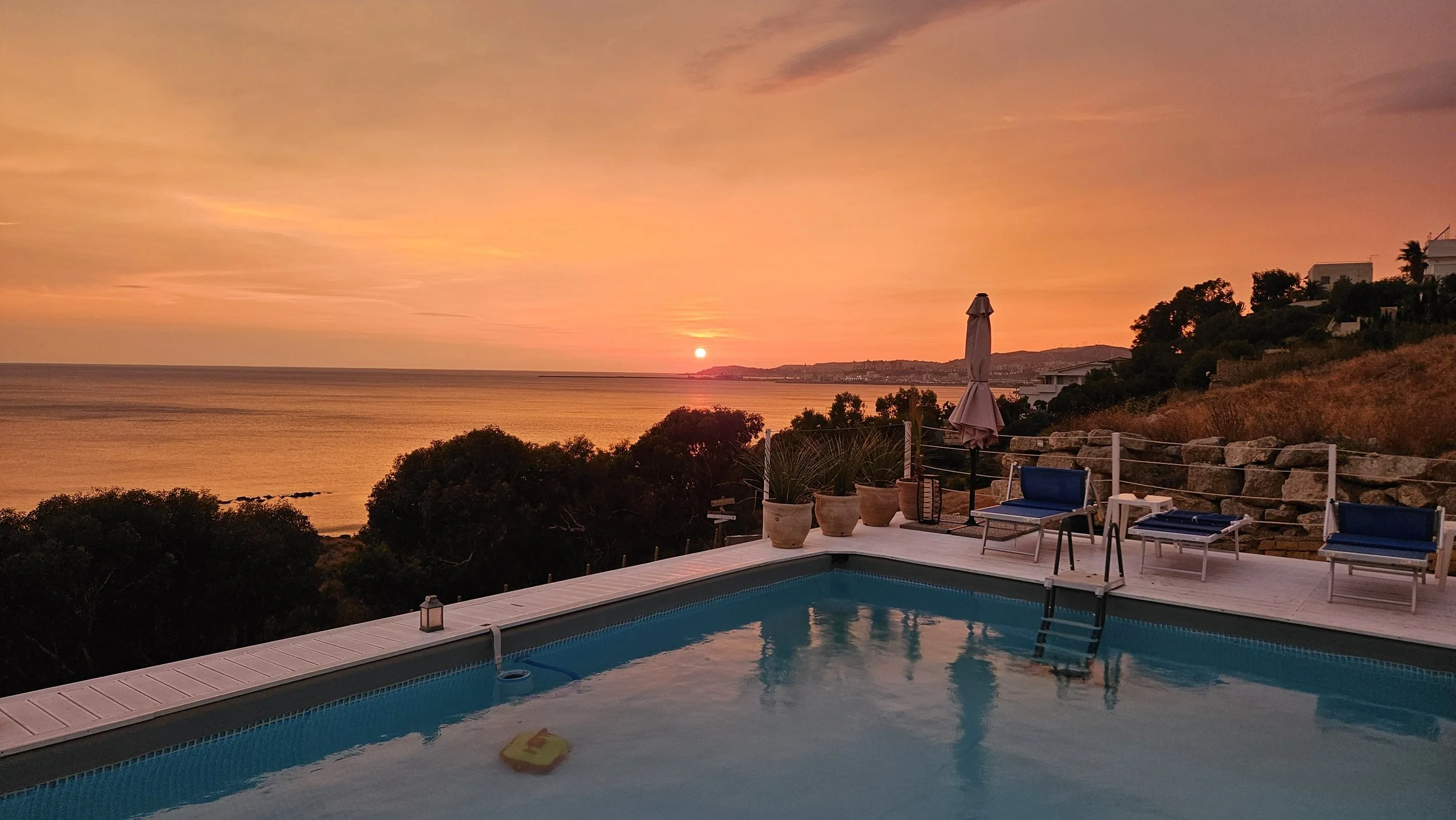
Southern Sicily might be Italy’s most underrated destination
Southern Sicily doesn’t put on a show for you because it doesn’t need to. The beauty here isn’t polished or packaged like some of Italy’s northern towns - it’s a little rough around the edges but that is what makes it such an incredible place to visit.
Our journey south started with a drive out from Catania, immediately escaping the hustle of a larger city.
First stop: Sutera. You can see this town looming from a distance and the village clings to the hillside beneath this looming rock formation, and everything about it feels stripped back.
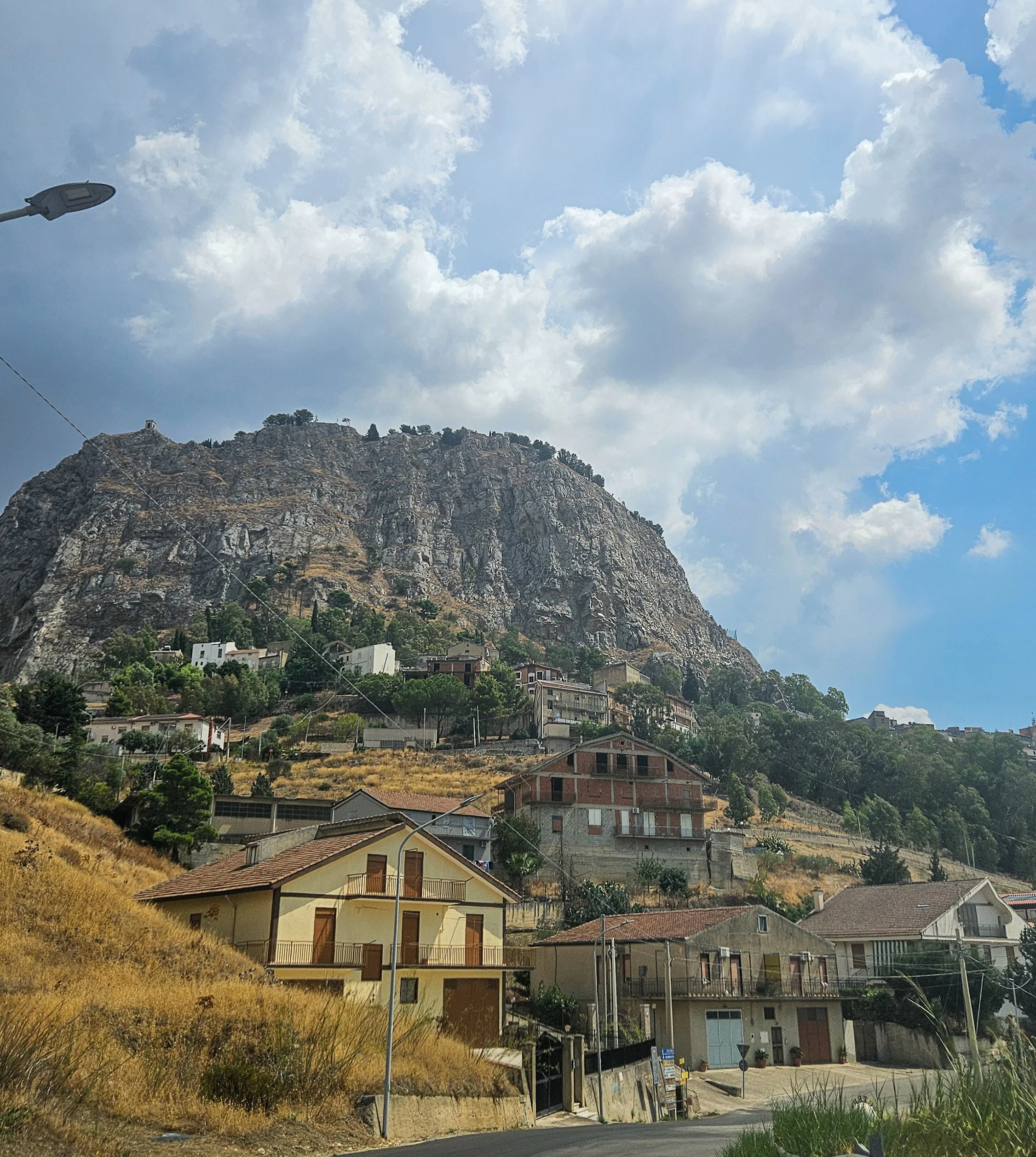
Sutera from a distance
Driving in, I found myself breathing in, in the hopes that would help our car fit through the narrow alleys!
You walk uphill through narrow lanes, past homes that look lived in rather than styled, and eventually the landscape just opens up and you can see for miles.
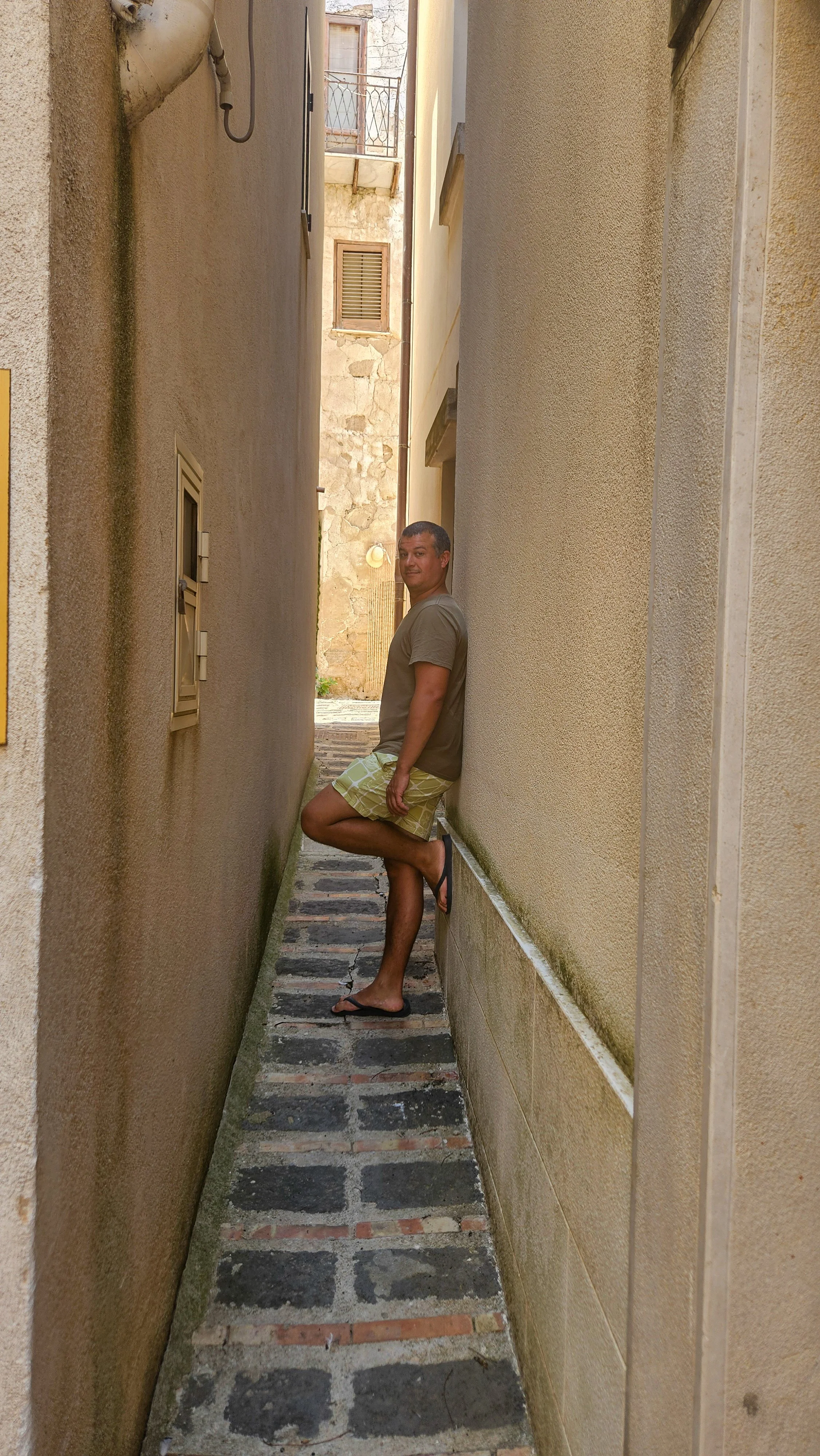
The alleys of Sutera are no joke
There’s not a lot to ‘do’ in Sutera, and that’s exactly the point – especially when you visit during lunchtime as we did and there was no one else in the street.
Agrigento, on the other hand, is one of those places where you do need a bit of intent. The Valley of the Temples is undeniably impressive, but it’s also exposed and unforgiving in the heat. Go early or go late, keep it tight, and don’t try to turn it into an all-day affair.
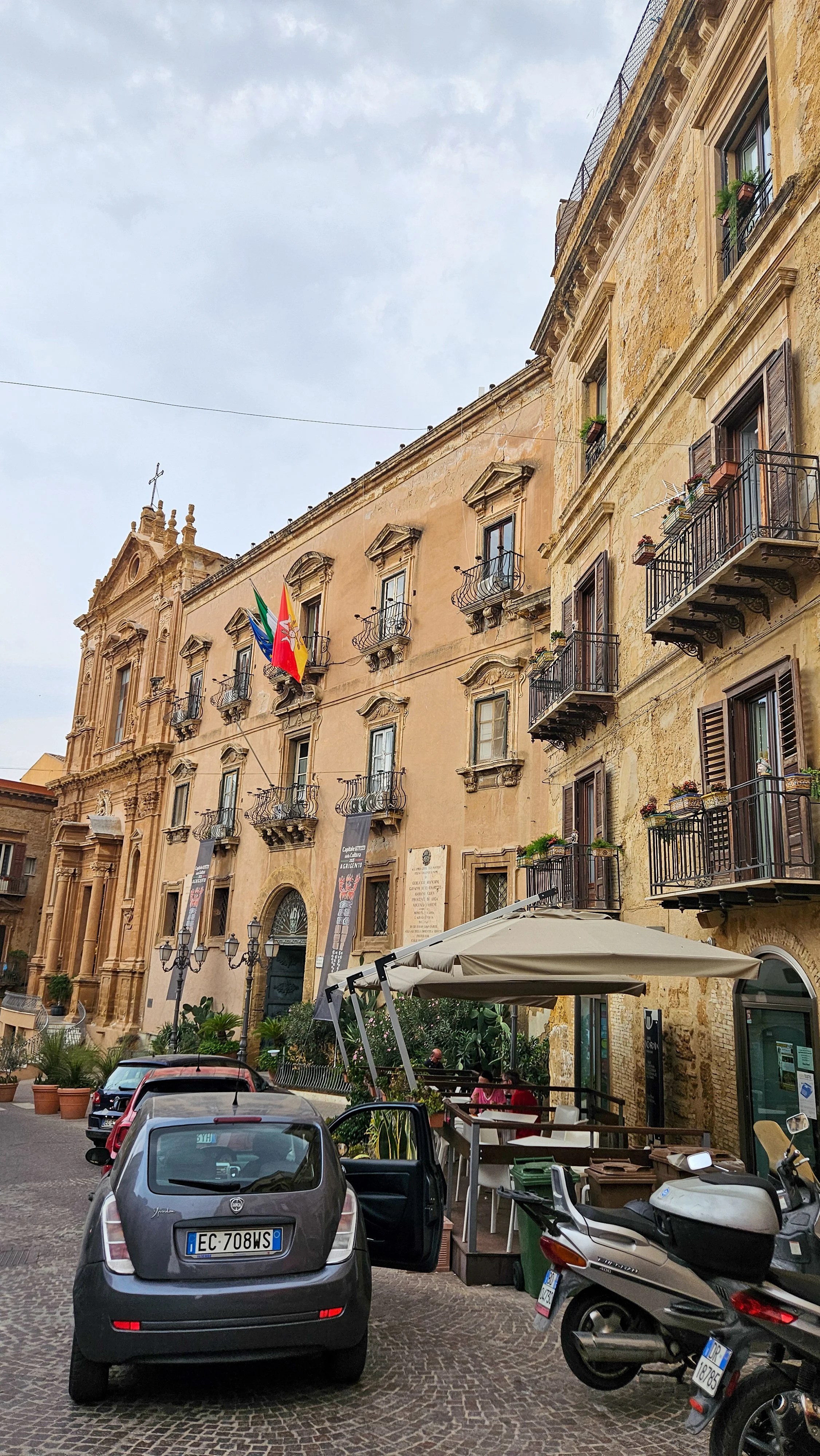
The charming streets of Agrigento
Wandering the town itself, you feel like part of every-day life. We discovered incredible local delis and pockets of charm where we could enjoy a drink.
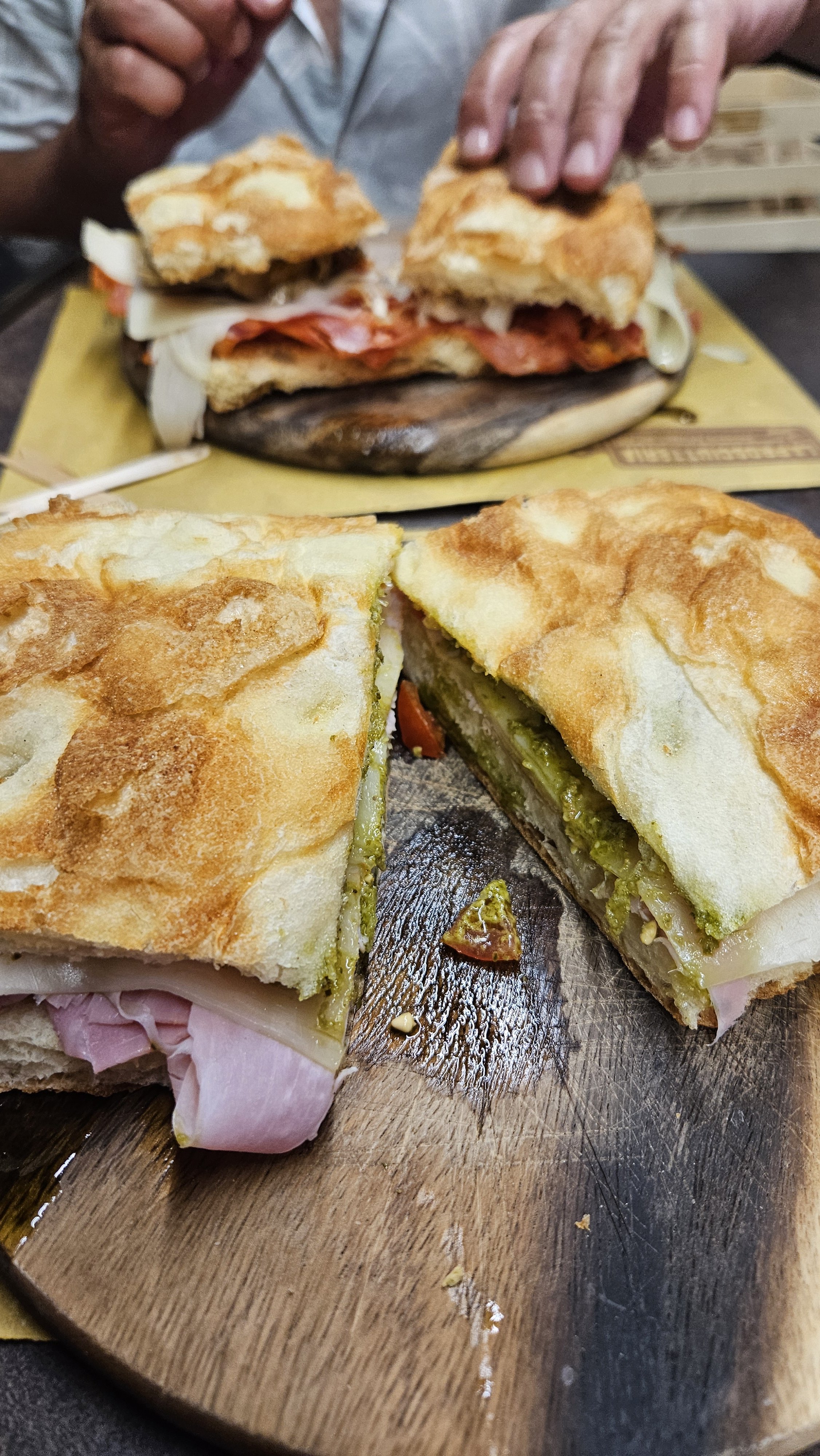
The sandwich of my dreams
The next stop is the coast, and Scala dei Turchi (Stairs of the Turks) feels almost surreal.
The first thing that catches you is the vibrance – you will definitely need your sunnies here. The limestone is this striking, chalky white that almost glows against the sea. The rock has been worn smooth over time, forming these soft, curved terraces that spill down toward the water. It genuinely feels like something sculpted rather than natural.
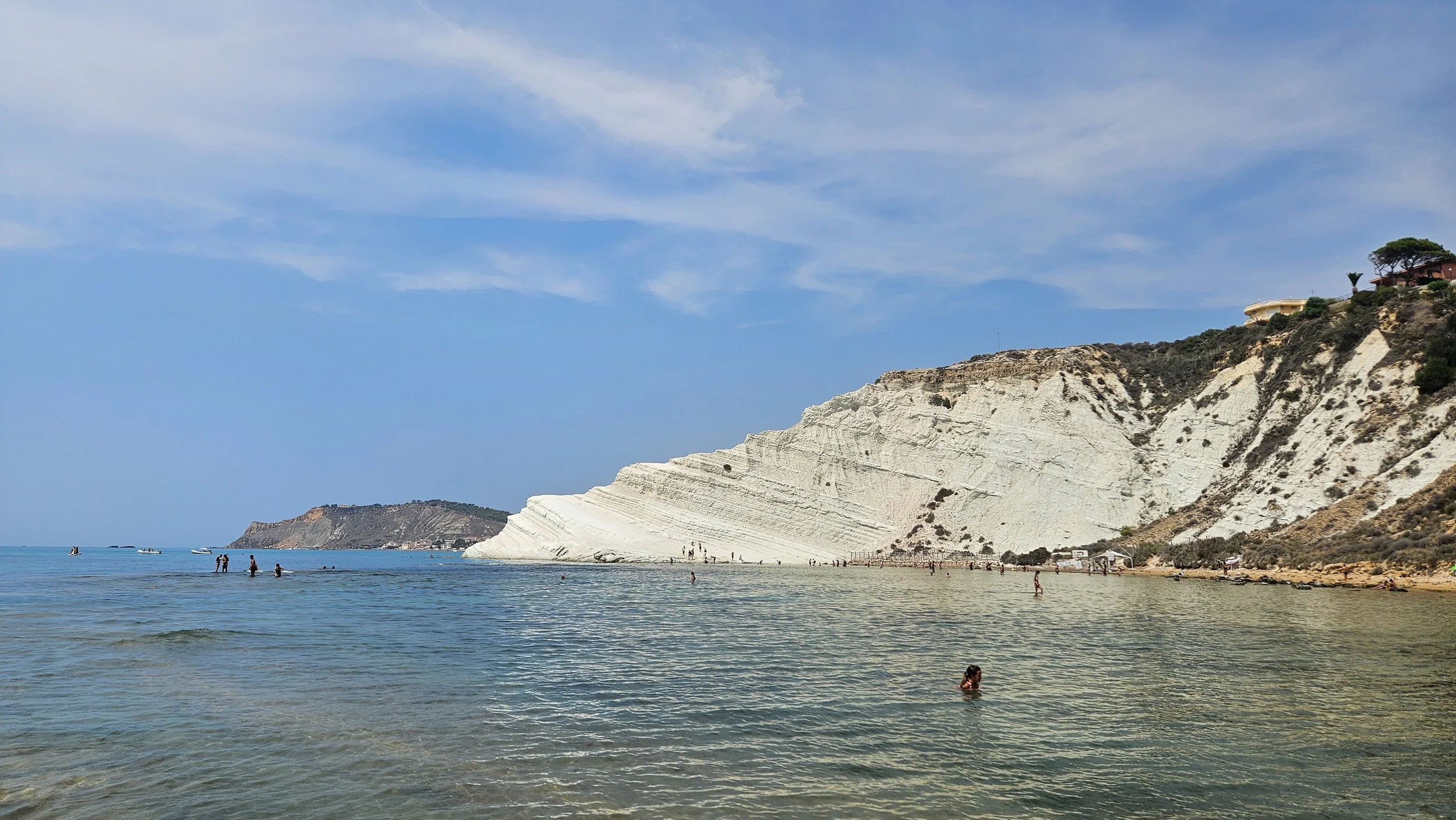
Scala dei Turchi
Walking on it is part of the experience. The surface is warm underfoot, almost polished in places, and you find yourself moving slowly without really thinking about it. People tend to spread out along the curves, sitting, lying back, watching the water shift colour as the light changes.
Timing matters here as in recent years, authorities are limiting how many people and when they can visit. Don’t come too late or you will miss out, though you can still swim nearby.
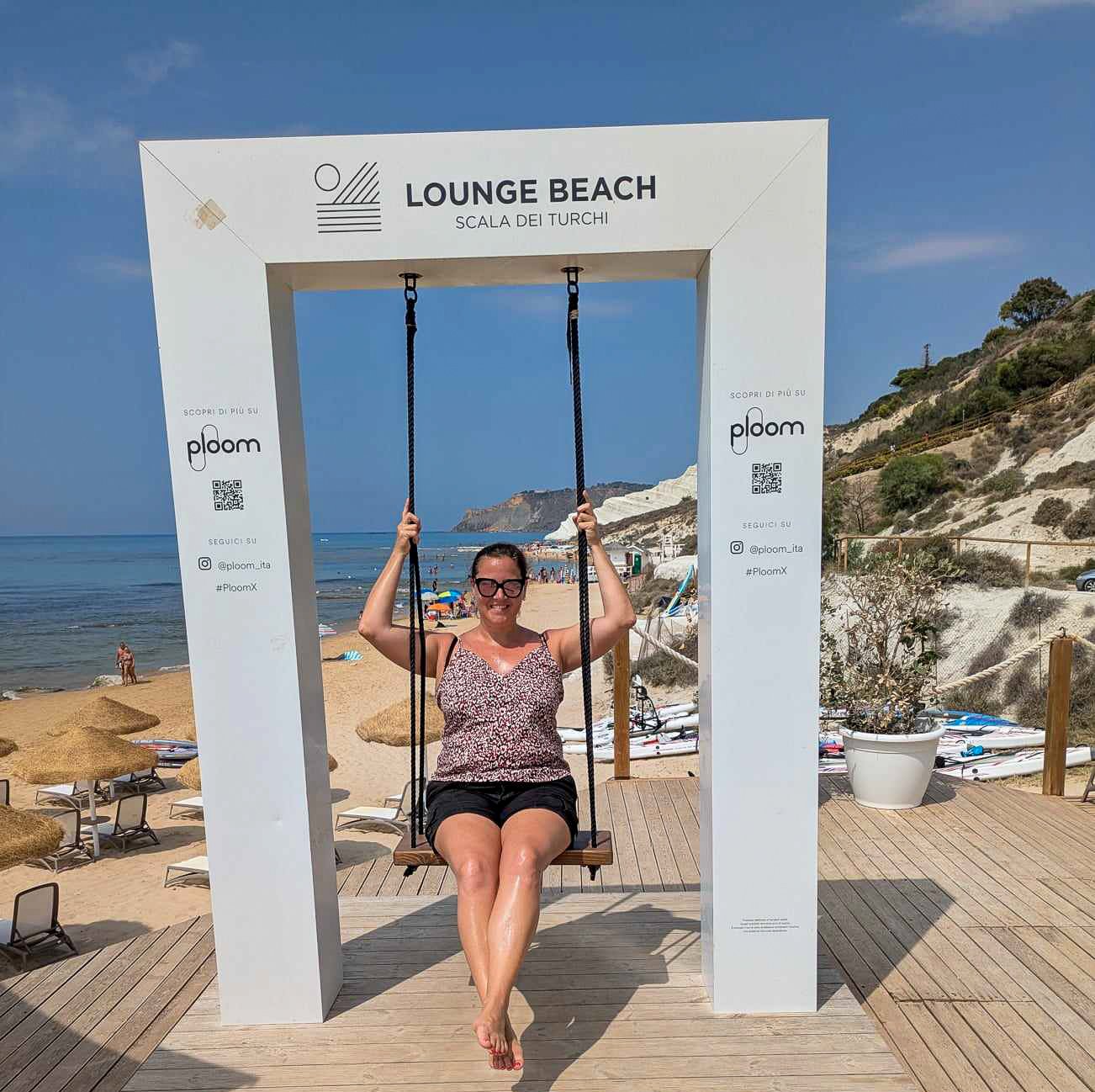
Fun at the Beach Lounge
If you do miss out, or just feel like admiring it from a distance, there are beach lounges like Lounge Beach Scala dei Turchi along the way, and this is the perfect spot for a cooling beverage.
Not far from there, the coastal region of San Leone is a great spot to enjoy sunset. You can walk along the water’s edge or really lean as we did with sundowners as Al Calante.
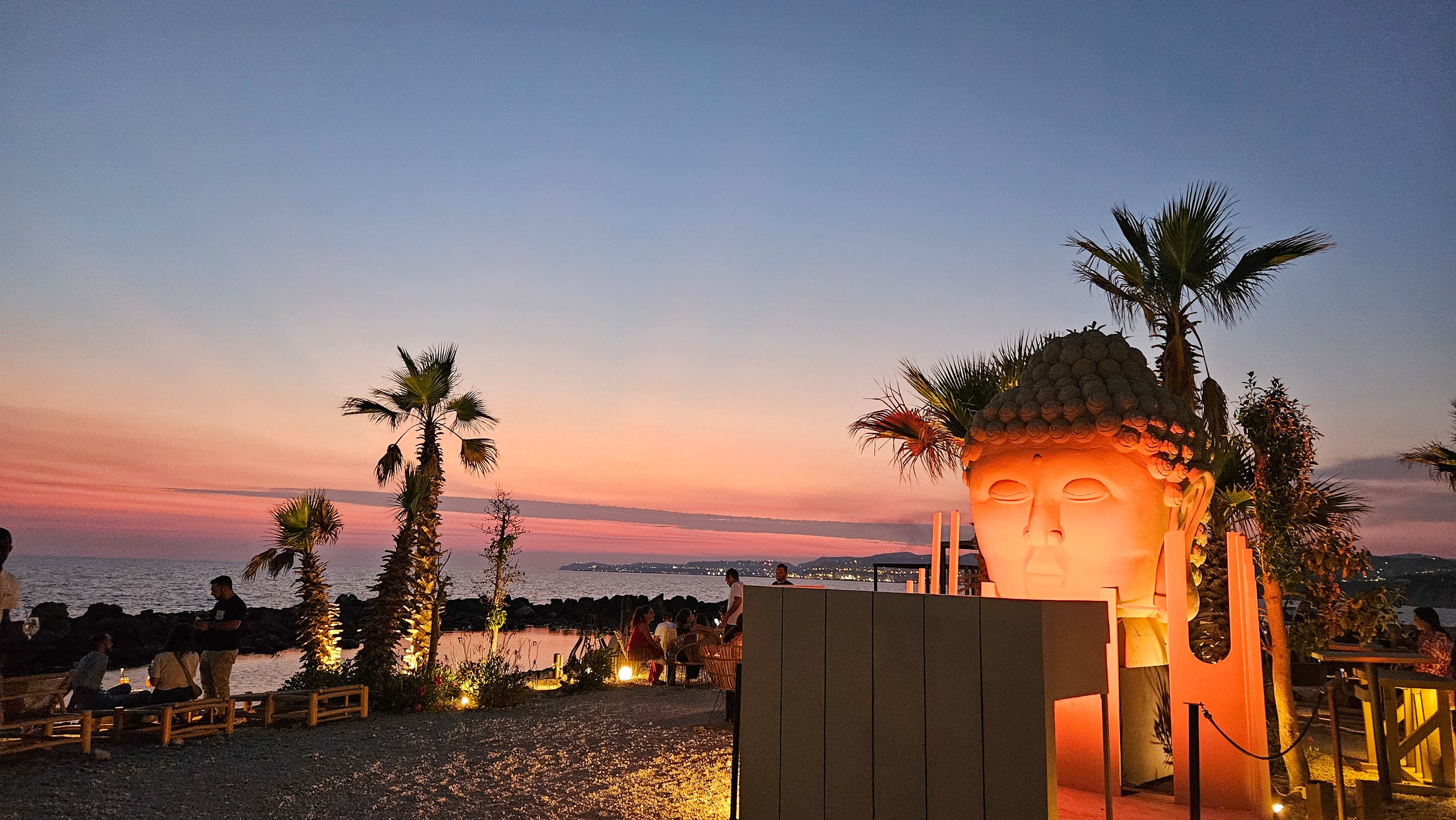
Al Calante
This is a sunset drinks spot, and it does that exceptionally well. There’s a definite Café del Mar energy to it, but without the pretence. Music drifting in the background, the light softening over the sea, people settling in rather than moving on and families embracing the vibe too.
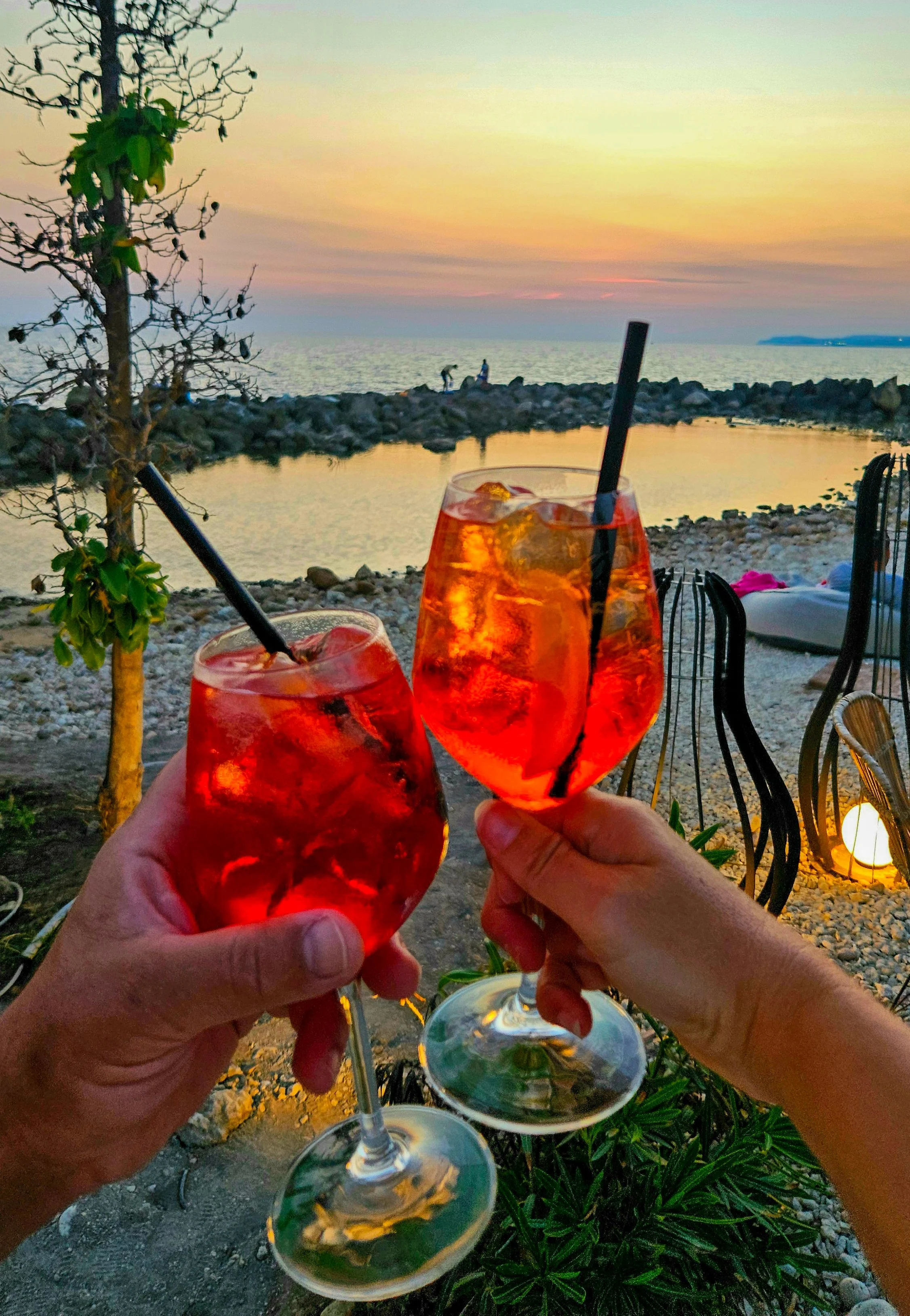
Sometimes an Aperol is the only answer
You grab a drink, find a spot facing the water, and the whole place just eases into the evening.
After all that exploring, you will want to have a spot to rest your head. We chose somewhere with a water view (because why not?)
Casa Vacanze Il Tucano delivers. It’s relaxed, personal, and far enough from the noise to give you space, but still close to everything you need. Plus, the views and the pool are the perfect reprieve from that hot Sicilian sun.
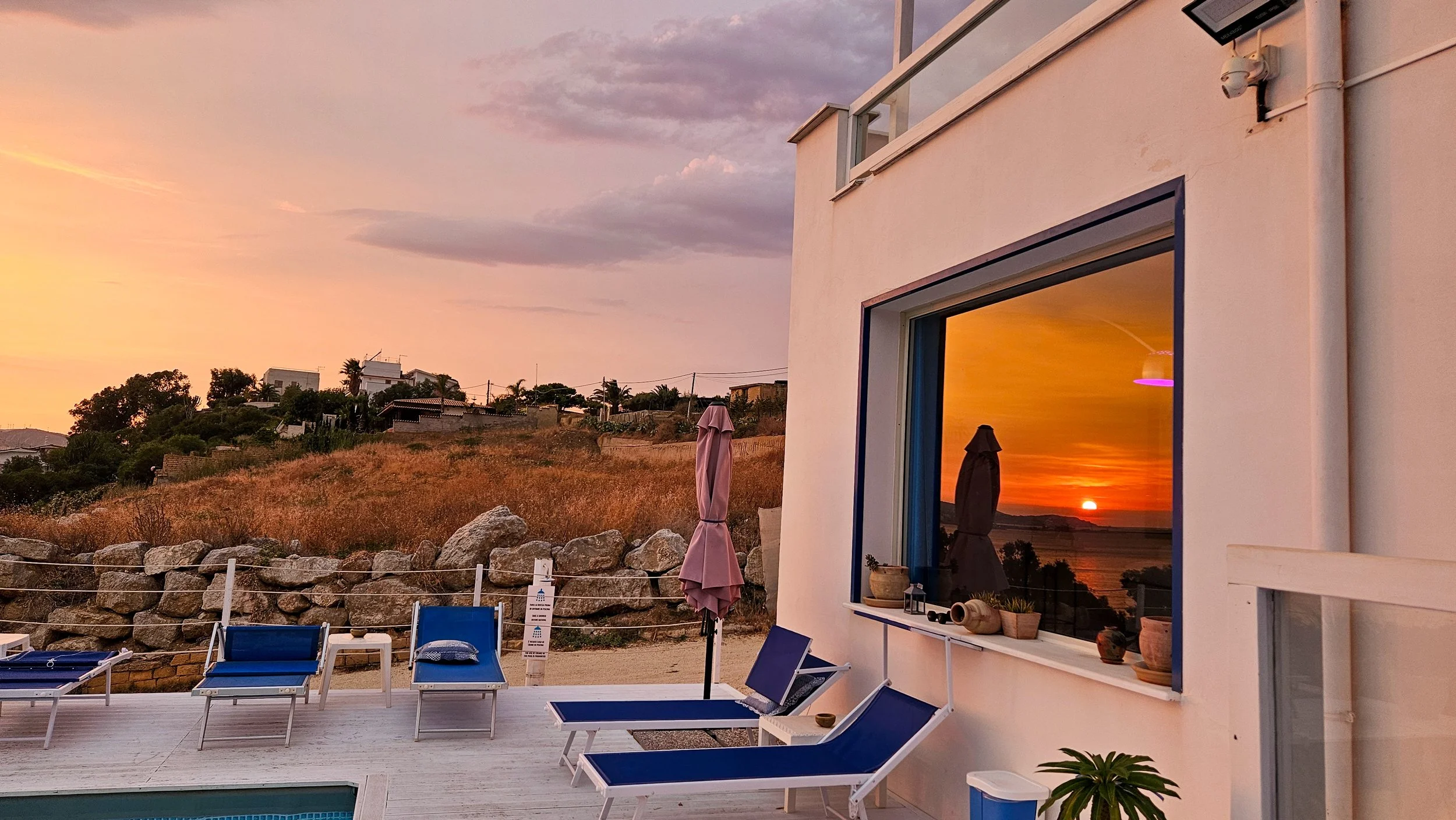
Casa Vacanze il Tucano
If you prefer beaches over pools, the accommodation is just a short walk from Lido Maddalusa. This is a quiet, more local-feeling stretch of coast just outside Agrigento with calm seas that welcome you for a dip any time of day.
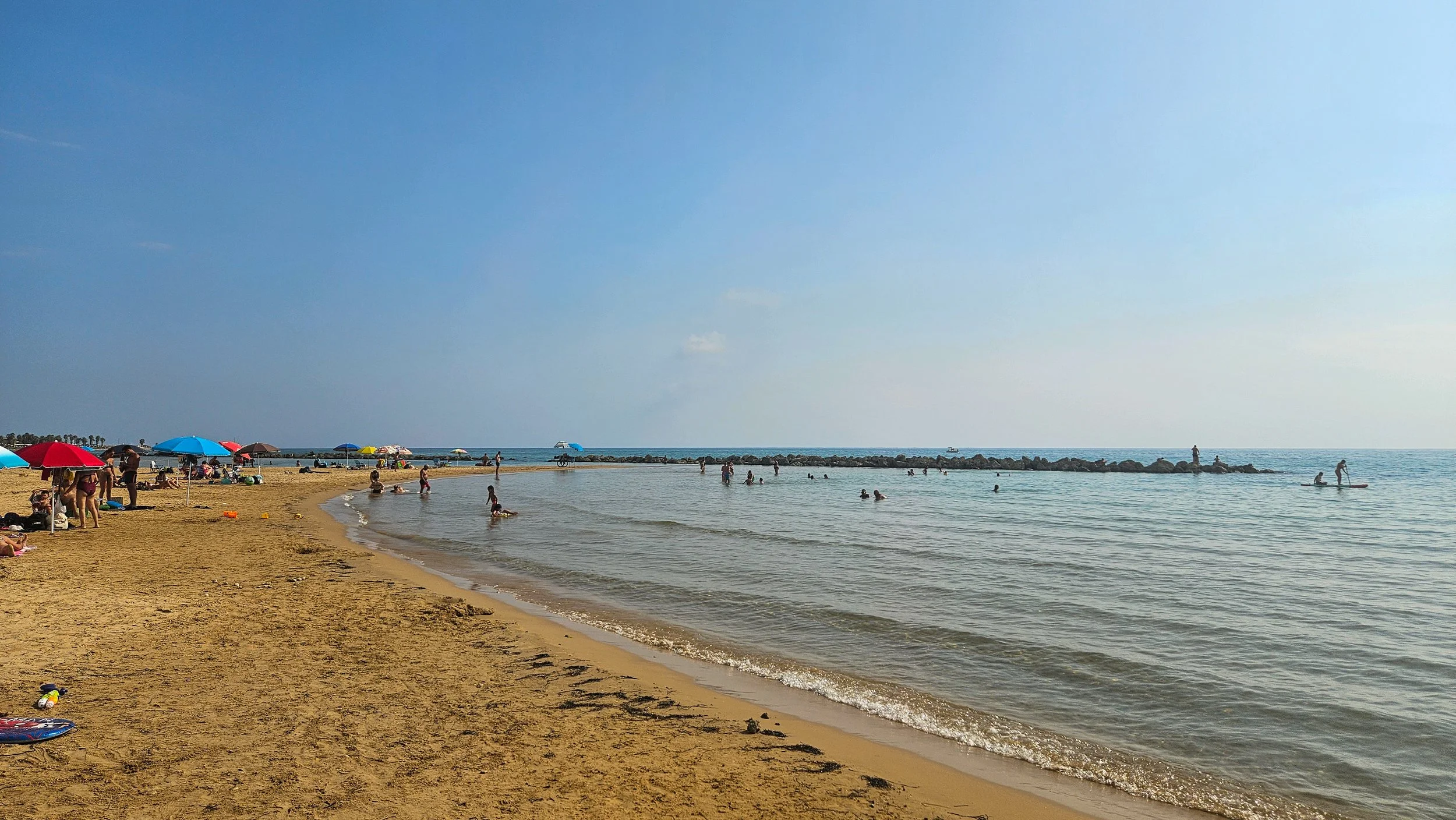
Lido Maddalusa
Leaving the coast again on our drive east, we made another lunchtime stop in Noto. This UNESCO-listed town is undeniably pretty, but it also feels a bit more curated than everywhere else you’ve been.
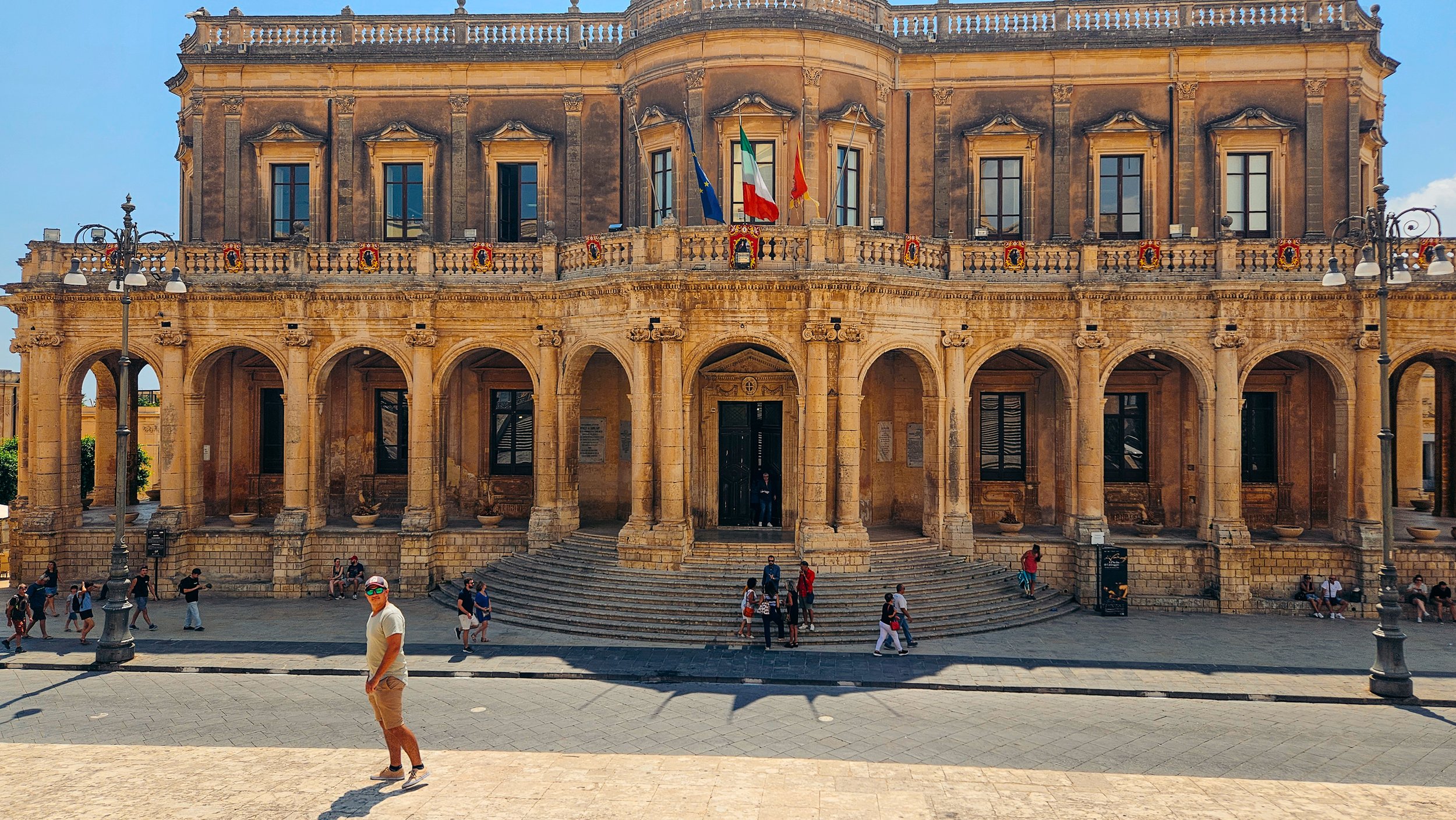
Noto
All golden Baroque architecture, wide streets, and that honey-coloured glow in the late afternoon. You don’t need long here. We spent a few hours wandering, had some gelato and lunch before moving on again.
Our last stop in Southern Sicily was by far my favourite.
The twin towns of Syracuse and Ortgia aren’t just good looking. Syracuse was once one of the most powerful cities in the entire ancient Greek world. We’re talking on par with Athens at its peak.
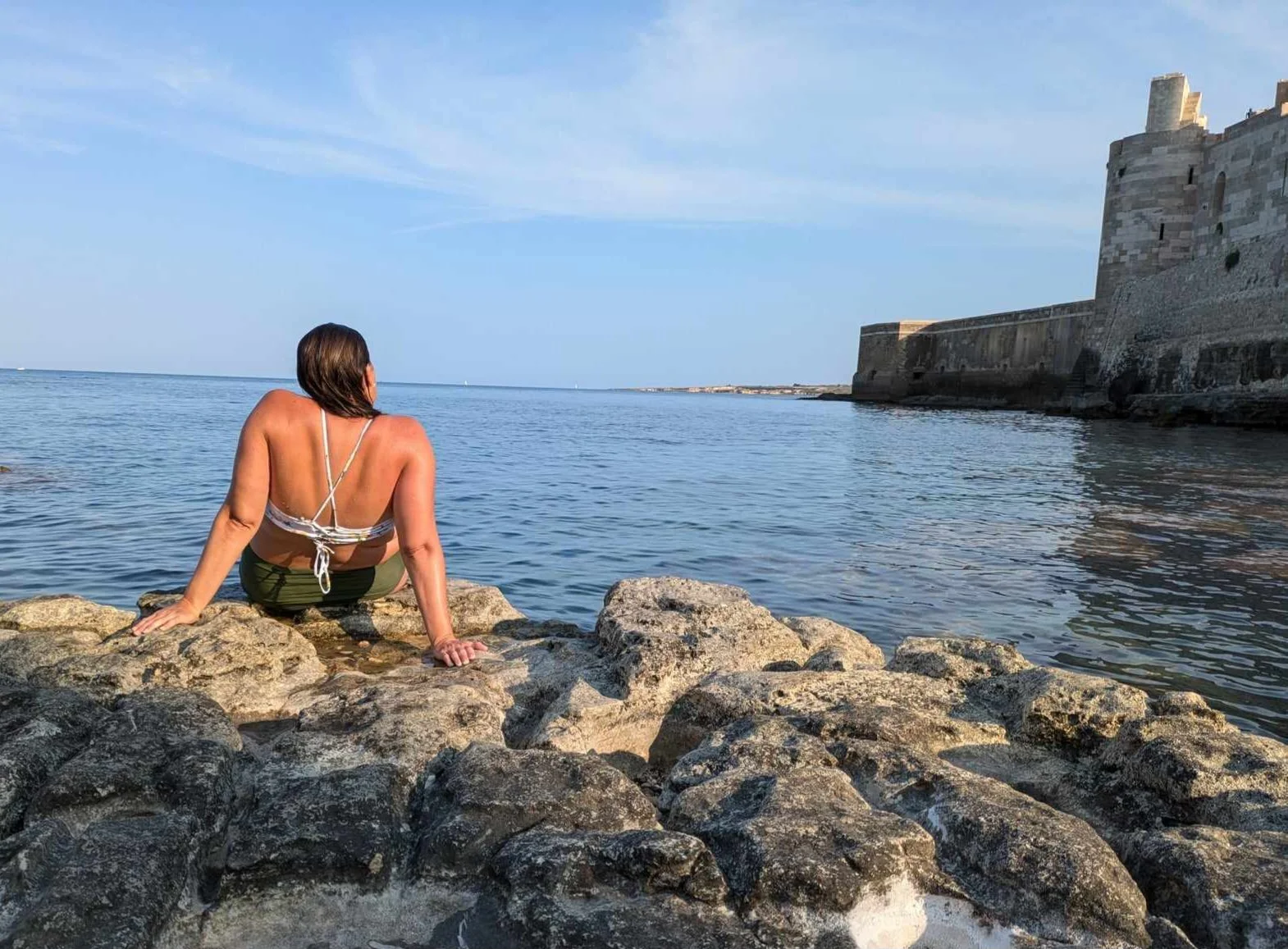
A rocky dip on Ortiga
Ortigia is small island at the heart of Syracuse, and you can still feel that layered history when you walk through it. Over time, it’s been shaped by just about everyone who’s passed through Sicily. That’s why Ortigia feels the way it does now. Greek foundations, Roman remnants, Baroque facades, all stacked on top of each other. It’s a place that’s been fought over, rebuilt, and reshaped for nearly 3,000 years.
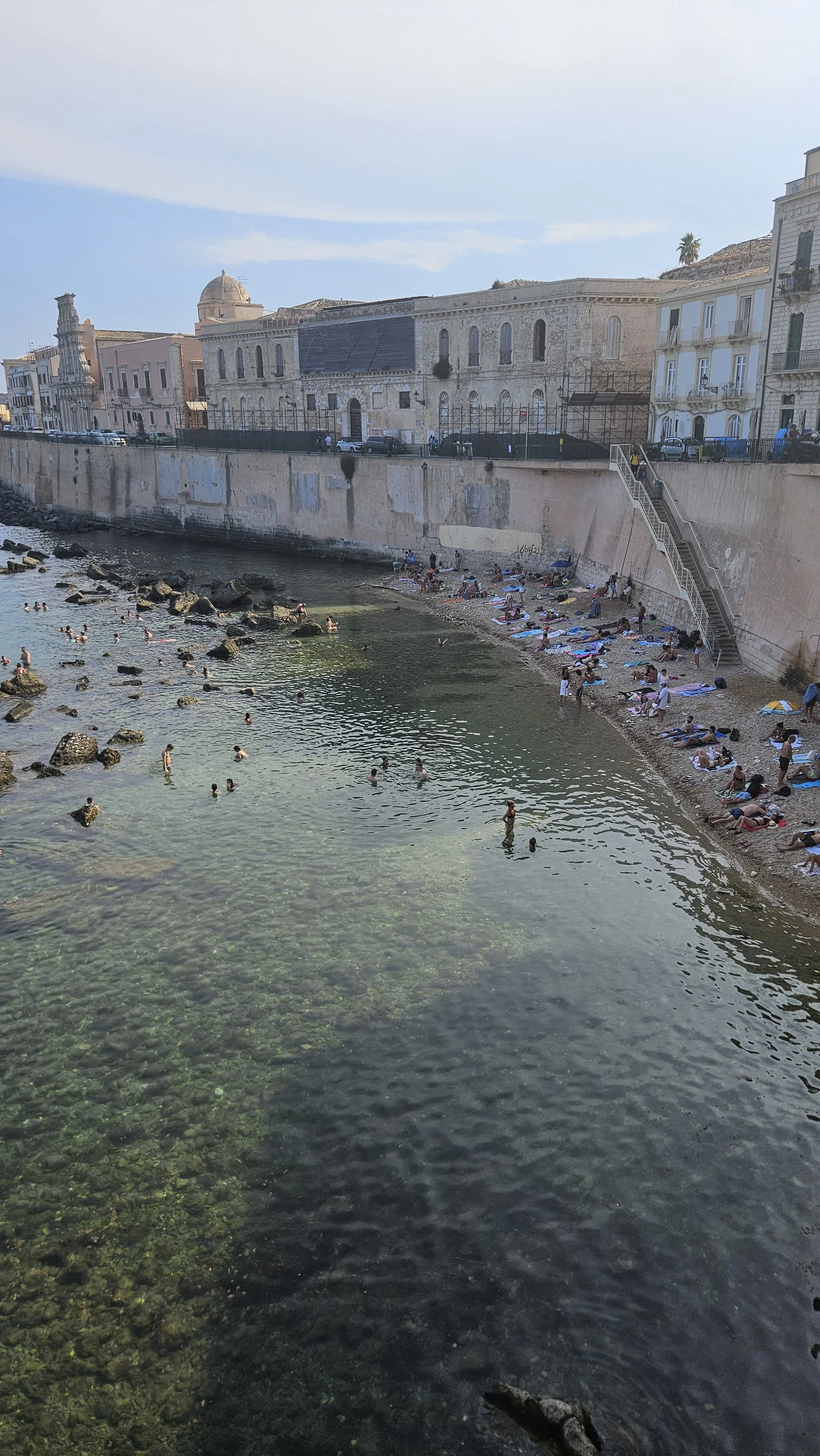
The relaxed daily life on Ortiga
We stayed in an Airbnb in Syracuse and walked onto the island each day of our visit.
Wandering the tight streets, you will find beautiful squares and then the next corner delivers stunning sea views. It’s a place you can wander without a plan and still fill an entire day.
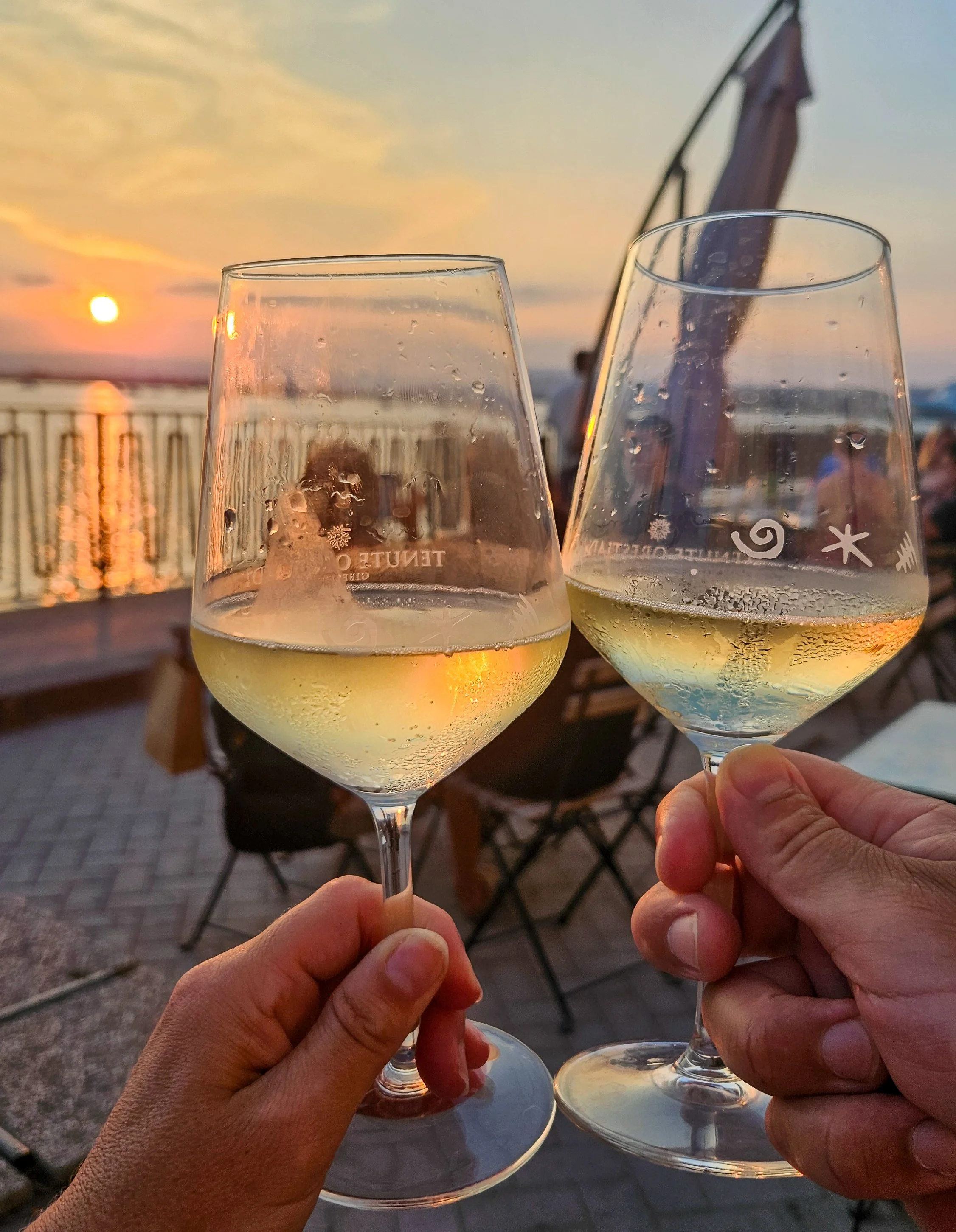
Sunset on Ortiga
At the far edge on the island of Ortiga sits Castello Maniace, and it’s worth the walk out.
Built in the 13th century under Frederick II, the castle (or more accurately, fortress) was designed to control access to the city and defend one of the most strategically important ports in the Mediterranean.
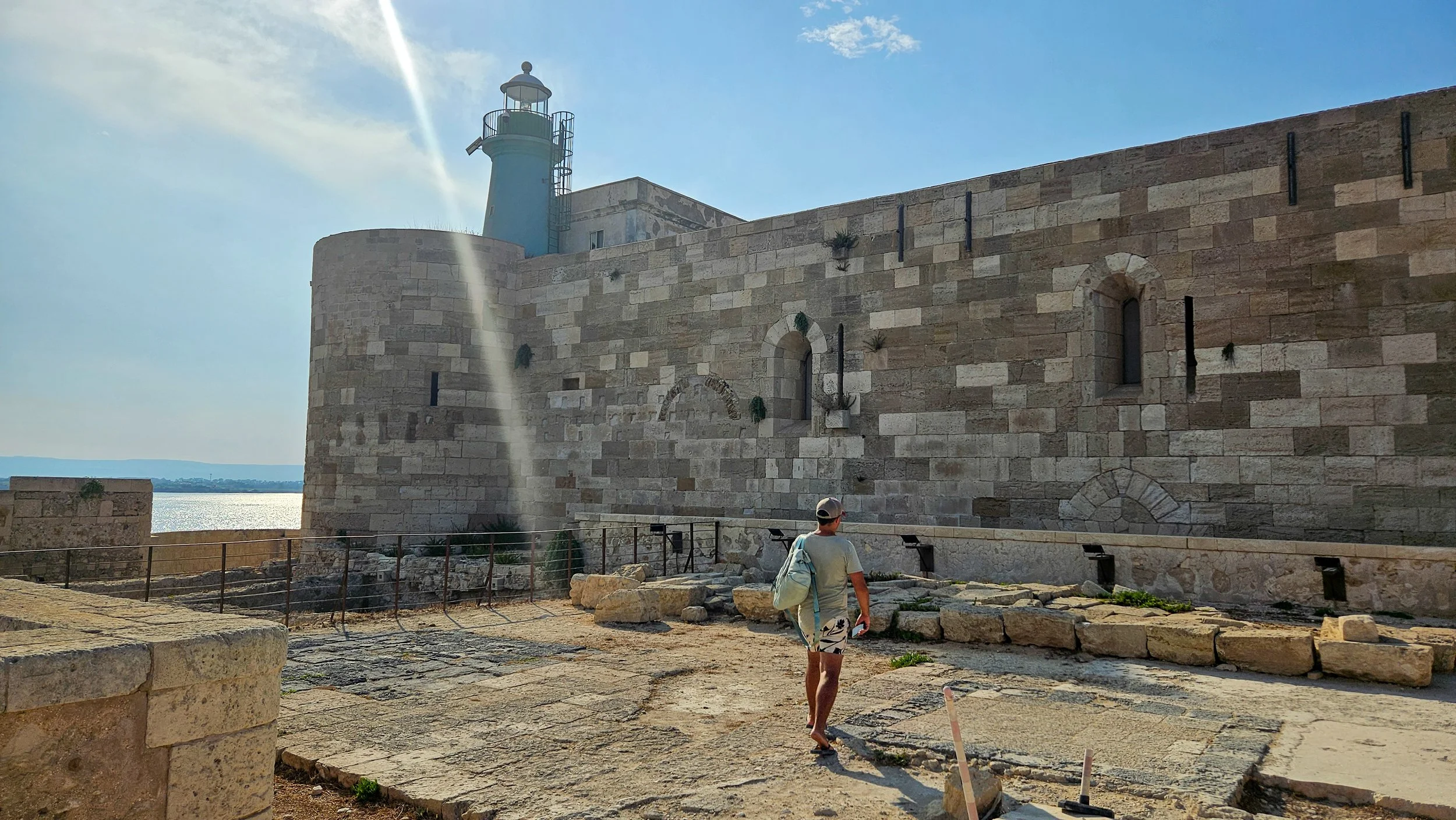
Castello Maniace
Inside, it’s fairly minimal (don’t expect curated exhibits) but still so interesting to see. You can buy a ticket for around €6.
Southern Sicily isn’t just about ticking boxes. It’s about moments like the unexpected village, the sandwich I dream of finding again, the stunning sunsets that seem to last hours and I can 100 per cent see myself returning here someday…
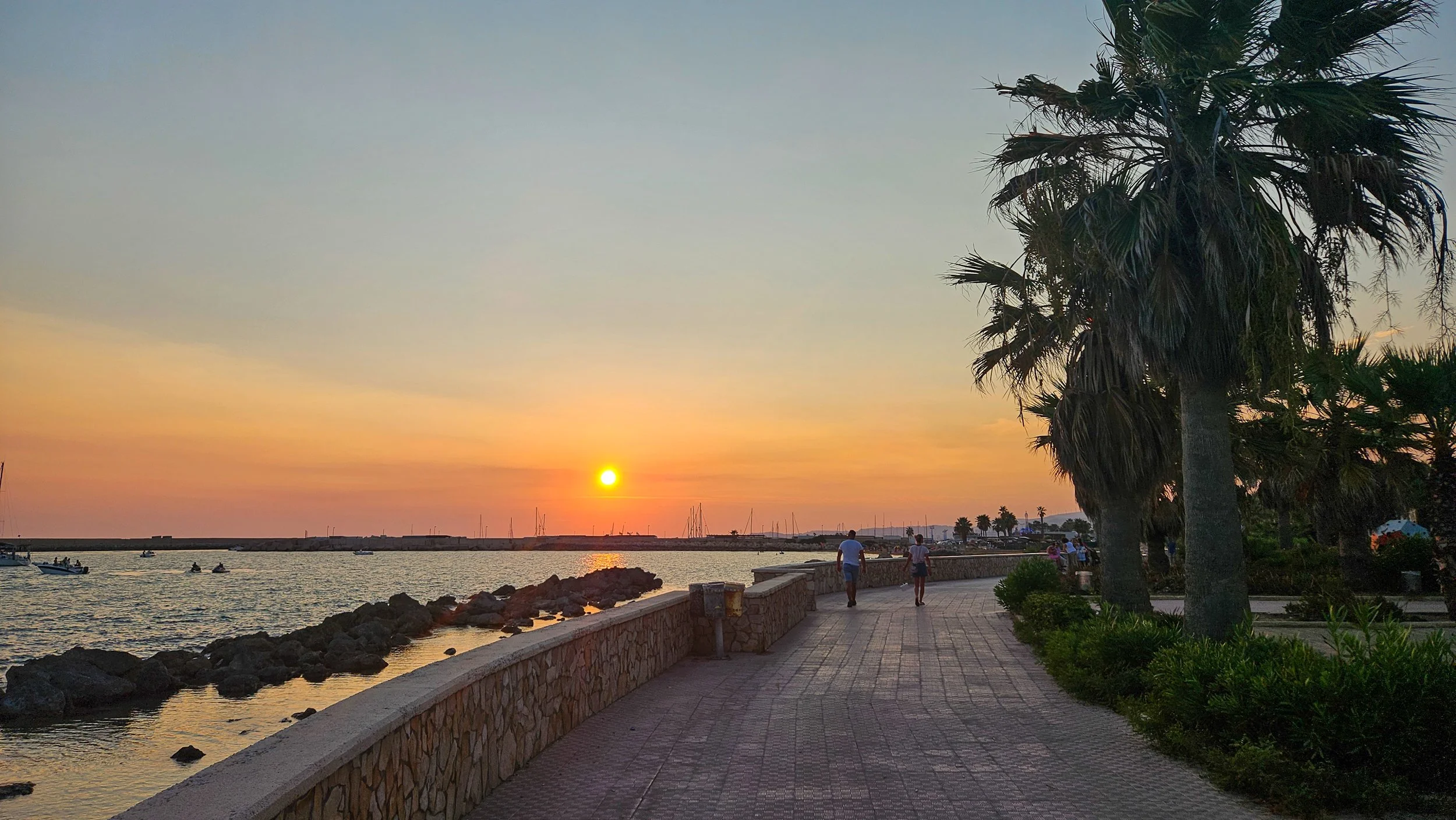
Sunset in San Leone

A taste of Etna’s legacy: Volcanic wines at Barone di Villagrande
Nestled on the eastern slopes of Mount Etna, where ancient vines cling to volcanic soil and clouds dance with smoke from the crater above, you will find one of the oldest vineyards in the volcanic area of Sicily - Barone di Villagrande.

The laid back arrival at Barone di Villagrande
This historic winery is a family-run estate with centuries of winemaking tradition. The vineyard was officially founded in 1727 when the current owner’s ancestor, Don Carmelo Nicolosi was given the title of Baron of Villagrande. The vineyards have been cultivated by the same family ever since.
After arriving through the winding roads up the mountain, ash piled up where it has floated down from the famous volcano above, the views at Barone di Villagrande take your breath away. You can see the Ionian Sea shimmering in the distance, framed by the dark, fertile slopes of Etna. The vineyards cascade down the hillsides, orderly yet wild.

Acres of vines
There are two options to taste wine here and in typical Sicilian style, neither of them are fast!
You can indulge in a full four-course lunch with your tastings, or as we did, opt for finger foods to match the wines.
Both are guided tastings starting with a visit to the ancient cellars on the estate and include the opportunity to try the dishes of the Etnean kitchen paired with the wines. Menus are entirely seasonal, but they do cater to dietaries.

Tasty morsels
Our host, charming and unhurried, began the tasting with a full glass of the Salina Bianco and left us to enjoy it. We sipped slowly, enjoying sitting in the warm outdoors and the light breeze on a hot summer day.
The wines that followed were the Etna Bianco (my favourite), the Etna Rosso, made from Nerello Mascalese. Pale garnet in color, it looked almost too delicate for its earthy aroma.

Enjoying the Etna Bianco
The finish we had a sweet wine, the Malvasia which matched our snacks perfectly.
All in all we spent at least two hours enjoying one of the oldest vineyards on an active (very active) volcano. We spent a little time in the shop on our way out, buying a couple of bottles of the Etna Bianco and some olive oil to enjoy on our travels.

Little pieces of history everywhere
Barone di Villagrande isn’t just a winery. It’s a quiet slice of paradise where history and love of good food and wine come together. It’s worth a visit.
If you wanted to linger a little longer, you can stay right here on the estate – there is even and outdoor pool overlooking the mountain vines.

Finding the quiet heart of the Amalfi Coast at Domus Claudia
When most people think of the Amalfi Coast, their minds jump straight to Positano or Amalfi. But let me let you in on a little secret: Atrani is where the real magic happens. One of Italy’s smallest villages is tucked between dramatic cliffs and the glittering Tyrrhenian Sea, this tiny town is the quiet gem of the Amalfi Coast - and I found my own slice of heaven at Domus Claudia Airbnb.

The view from our window
I fell in love with Atrani before I even unpacked my suitcase, despite the stairs to get to our room. And honestly? I think it had a lot to do with how wonderfully, blissfully quiet it is. While Positano dazzles with her glam and Amalfi buzzes with boats and gelato-chasing crowds, Atrani feels like the calm, sun-drenched little sister - leaning back against the cliffs, totally unbothered, sipping a spritz in the shade.
And nestled right into this serene slice of the Amalfi Coast is where we stayed: Domus Claudia.

King sea view room at Domus Claudia
We booked the King Room with a sea view, and let me tell you, those views did NOT disappoint. From the moment we opened the shutters, we were met with a watercolour-worthy scene of deep blue ocean boats and cliffs. Mornings here? A salty breeze with the hint of espresso. Nights? Moonlight dancing on the water, the whole town hushed like it’s sharing a secret.

Atrani by night
The room here was massive in size and decorated in beautiful cool tiles, and you get your own private bathroom too. The owner even provided a chilled beer on arrival which was amazing after lugging our bags up the stairs.
But there’s even more to enjoy: the rooftop terrace which is where we enjoyed our cold beers. I swear it’s one of the best-kept secrets on the coast. A magical little perch above it all - ideal for morning yoga (if you're that kind of person), golden hour Aperol spritzes (if you're my kind of person), or just pretending you’re in a movie.

Domus Claudia rooftop terrace
Now, if you’ve ever been to the Amalfi Coast in peak season (or just seen some photos of those packed beaches), you know the drill - crowds, lines, narrow roads full of scooters and honking cars. Atrani? It’s like stepping into a postcard that forgot to invite the tourists. You can stroll from the quiet beach to the piazza in 30 seconds, and if you time it right, you’ll find yourself the only one wandering those quiet cobbled alleys. We loved our quiet mornings here swimming before breakfast and an espresso.

Views in another direction from our room at Domus Claudia
We used Atrani as our home base for four nights and walked to Amalfi in about 10 minutes (yes, really). There is a pedestrian tunnel that connects the two towns, meaning ferries to other parts of the Amalfi Coast are super accessible.

The well-lit pedestrian tunnel
After exploring Amalfi or hiking the Path of the Gods, we’d return to Domus Claudia, slip off our shoes, and exhale into that sweet, salty quiet.
If you’re looking for the perfect blend of sun, sea, and serenity, skip the crowds and stay in Atrani. And if you want a place that feels like your very own Amalfi fairytale - Domus Claudia is it. Just don’t tell too many people. Let’s keep this little dream between us, okay?

Traversing the breathtaking Path of the Gods
The Amalfi Coast in Italy is stunning from any angle but hiking along the clifftops of the Sentiero degli Dei (the Path of the Gods) offers up unbeatable views.
The official path runs from the small mountain-top town of Bomerano and finishes in Nocelle but you can continue (as we did) down the 1700+ stairs to end up 500 metres below in bustling Positano. Just prepare your legs for that finish!
It is recommended to do the hike in this direction to make the most of the views but also as this way has less uphill so is a little easier on the legs.
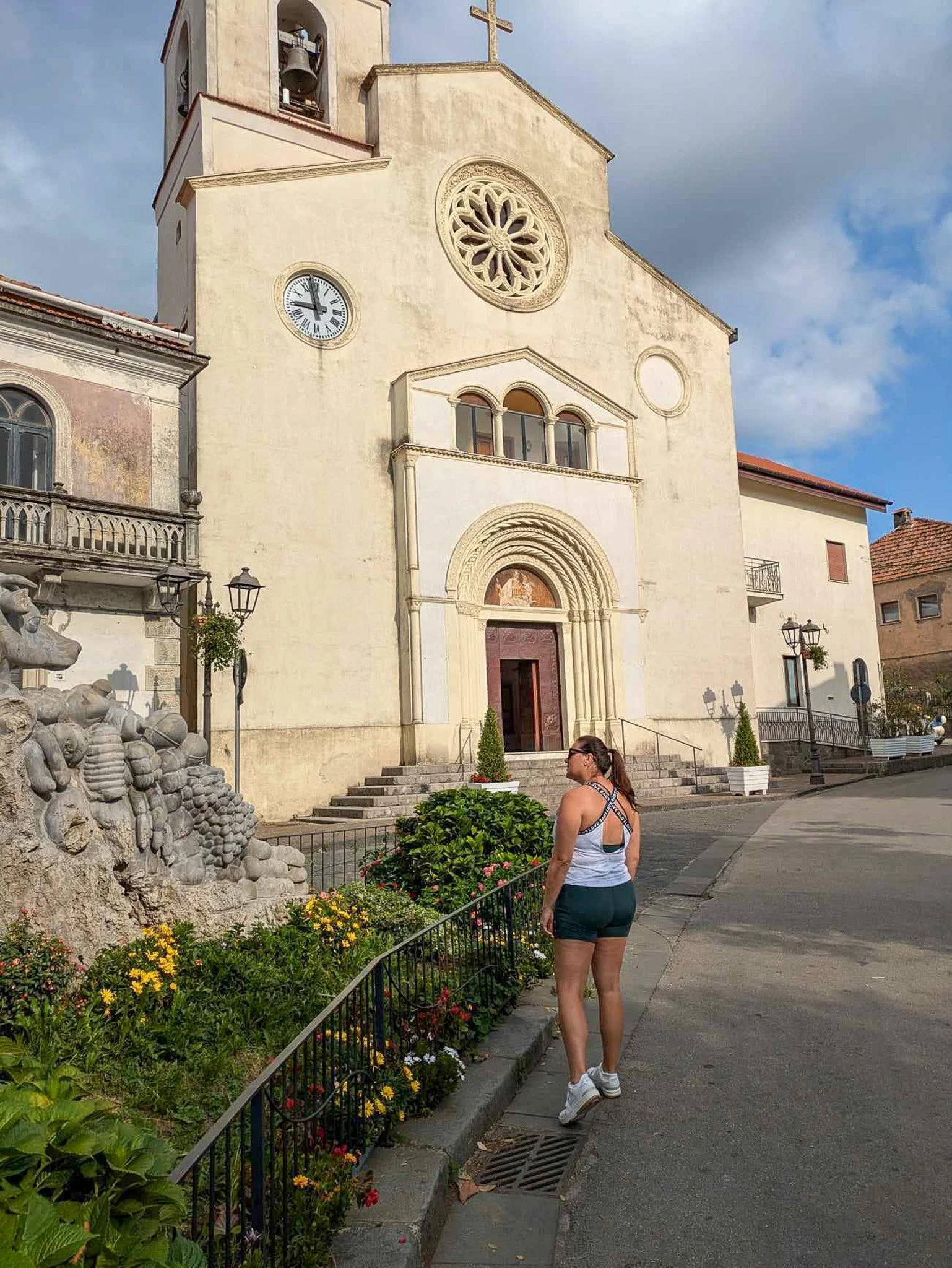
Appreciating Bomerano
This has to be one of the most beautiful walks but honestly, it is probably not for the faint of heart in the Italian summer heat and there is some up and down as you hike along.

Spectacular views along the way
We did this hike in August 2024, and it was HOT. We caught one of the first morning buses from Amalfi town to take us the 40 minutes up the winding mountain roads to do as much of the hike before it got too hot.
The only catch with this early bus is that we did have to hunt to find a place that sold bus tickets at that time, we ended up finding a café in Amalfi that sold them but only if we grabbed an espresso as well – cash only too for those that are wondering.
The bus dropped us near the main piazza of Bomerano and we grabbed a mozzarella roll and another espresso to fuel us for the walk ahead.

Breakfast in Bomerano
You walk out of town a little to the official start of the trail. From there, the trail is easy to follow—look out for the red and white lines that mark it along the way. Follow signs for Sentiero degli Dei, trail #327 and after about 800m you will be at the official entry to the hike.

The official start of the Path of the Gods
We had a day of bright sunshine and there isn’t too much shade along the way. I was grateful we had packed loads of water and sunscreen with us for the morning out.
The trail itself is a mix of graded dirt and gravel trails, up and down large stone steps, and over rockier, uneven trails – we were passed by a herd of goats that are clearly more accustomed to this kind of terrain!

The path is right on the edge
About two kilometres in, there is a fork in the road, an option for those that are truly afraid of heights to take a slightly different path to Nocelle. The main cliff path with the spectacular scenery is #327, and #327a will take you on a less exposed path.

Epic views
This is where the trail really delivers the views. We really took our time over the next couple of kilometres, soaking up the Amalfi Coast vistas. The dramatic peninsula seems to stretch forever in the distance.
Alongside the breathtaking clifftop, we passed by terraced farms, lush vineyards, and fields of wheat.
Along the way, there are a couple of water points and picnic benches were excellent places to stop for a breather and enjoy the views. We actually stopped at what felt like just after half way for a frozen lemon drink at what looked like a shack on the edge of the cliff. I later discovered that this eclectic construction is called Ulisee’s House and was perfect for cooling off a little in the shade.

Inviting us in for a cold drink…
As we got close to Nocelle, we could even see the Island of Capri in the distance.
Nocelle is a tiny village but we stopped at a little restaurant/bar as we entered the town that offered incredible views. A couple of cold beers at Il Chiosco del Sentiero Degli Dei were just what we needed before tackling all the stairs to Positano.

A beer with a view in Nocelle
Thankfully the views on the way down are worth the burning quads but I did have to stop a few times to take a little break.

Directions are easy to find
Once you reach the bottom of the stairs, you actually have to walk along a part of the winding road to get to Positano. I probably found this the most stressful as there is no footpath and the road seems barely wide enough for one car!

Some of the stairs down to Positano
After a day of seeing very few people, the teeming masses as we encountered as we walked in to Positano was a little overwhelming. We stopped at a restaurant along the way to grab a bite to eat and another cold drink. I couldn’t even tell you the name.
We wandered around for a little bit before deciding we needed to head back to our quieter side of the coast. This meant again braving masses of people to find the right ferry to take us back to Amalfi town where we jumped in for a swim before walking back through the pedestrian tunnel to Atrani.

Positano
In my opinion, the Path of the Gods is definitely worth hiking. It’s a beautiful trail that gives you a different perspective on the stunning Amalfi coastline, and if you start early, it’s also a peaceful escape from the crowds that seem to be everywhere in the busy summer season.
The stats:
From Bomerano to Nocelle, it is about 6.5km and should take about two to three hours.
If you are adding the steps down to Positano, allow at least an extra half an hour to an hour as the elevation drops from 450m to 80m.
Total Ascent: 235 metres
Total Descent: 780 metres
Highest Elevation: 650 metres
Lowest Elevation: 80 metres