


The Roman ruins in Morocco: Volubilis
When we booked our trip to Morocco, I knew there would be a lot to see and do but I didn’t expect to visit the edge of the former Roman empire.
Not far from Meknes – a city with an imperial past and stunning gates – you will find Volubilis.
This UNESCO-listed site dates back to before the Roman times and it is one of the country’s most significant archaeological sites.

Surrounded by mountains and fields, Volubilis was once a Berber settlement, before later becoming a strategic outpost of the Roman Empire.
It is the ruins of the Roman empire you come here to see. What struck me was how vast the site is and that is with only a fraction of the buildings properly exposed.
For perspective, the site today is about 20 hectares, half of its original size. Excavation teams are still working to uncover the other half.

It is believed nearly 20,000 people once called this city home!
According to historians, the remains of Volubilis remained essentially intact until an earthquake in the mid-18th century caused it to crumble. Stones, marble, and other building materials were then scavenged for buildings in Meknes.
Remnants of ancient palaces complete with stunning floor mosaics that have stood the test of time. Among the ruins, you will find statues, a bathhouse and an aqueduct, making this an impressive site to visit.

The ruins seemingly appear in the middle of nowhere. This is probably why Volubilis is still considered one of the Roman Empire’s most remote outposts.
Volubilis was a wealthy city and a centre for olive production, the oil was then exported to Rome together with wheat and olives.
The sites to look out for are the Mosaic test of Hercules, arch of Caracalla and the temple of Jupiter.

Given this is Morocco, don’t be surprised if you spot a donkey or two hiding among the ruins and sprawling olive groves at Volubilis.

We travelled with a tour group but have heard stories that the entry is hard to find on your own – and we had the added bonus of the guide explaining a bit more about the story behind the ruins which really brought the history to life for me.
If you visit the site solo, near the entrance, you will find official guides offering services in many languages.
We spent the best part of two hours exploring the ruins and didn’t even cover half of the site. Pack water and a hat, especially if you are visiting in summer.
Even if you aren’t stopping at Meknes, Volubilis is easily accessible from Fes as well and from my point of view, it is definitely worth the trip.


Finding Sunrise
Being on the east coast, the Sunshine Coast gets way better sunrises than sunsets – unless you find a nice spot at Noosa Main Beach in autumn or summit one of the Glass House Mountains for a bird’s eye view.
Luckily, I am a bit of a morning person so getting up to spot sunrise is something I relish – albeit not during Queensland summer when the sun gets up around 4am!

Here on the Sunshine Coast, we are lucky to have some of the world’s best-kept beaches where you can enjoy that small window of time each day where dark becomes light.
The best bit is that generally you only have to share the view with a few other early risers unless it is Anzac Day!
Here are a few of my favourite sunrise spots:
Mudjimba
Watching the sun rise above the horizon and over Old Woman Island is one of my favourite ways to start the day!

Grab a coffee from High Tide or the Island and watch the surfers catch waves as the sky changes colours. The most dramatic colours are usually just before the sun actually comes up, and I love walking down the beach and soaking it all in as the waves lick at my feet.
Maroochy River
One of my regular morning running spots is along the Maroochy River from Fishermans Rd to Chambers Island.
During autumn and winter, the still river water reflects the colours of sunrise in the most beautiful way that I inevitably stop and take photos at different points along the way – quite often using my dog as a model.

One of the best spots to stop is near the quaint boathouse jetties jutting out over the river or standing on the bridge over to Chambers Island watching the kayakers and SUP-ers paddling in the changing light.

Mooloolaba
Every morning without fail, the Beach Bums take to the calm waters at Mooloolaba for an ocean swim. I enjoy getting there a bit earlier and watching the sun rise over the lighthouse at Pt Cartwright in the distance before jumping in the water.

The stretch of sand can get a bit busy here - even before 6am – so I tend to walk further down towards the point to enjoy the scenery on my own.
Sunrise Beach
It should come as no surprise that a beach named after the event is a good spot to see sunrise!
Jutting up against the Noosa National Park, Sunrise Beach’s endless stretch of white sand and pristine rolling waves make it the perfect spot to soak up the earliest rays of sunshine. Take a picnic blanket and get cosy on the hill and watch the show.
Mt Coolum
Start the little day with a hike up Mount Coolum and you’ll be rewarded with a great vista to watch the day start out, with views extending from Noosa National Park to Caloundra, as well as the cane fields and Maroochy River.
Early morning is one of the best times to climb Mt Coolum, before the heat of the day and before the crowds turn up. To catch the sunrise from the summit, you’ll want to start pretty early and take a torch.
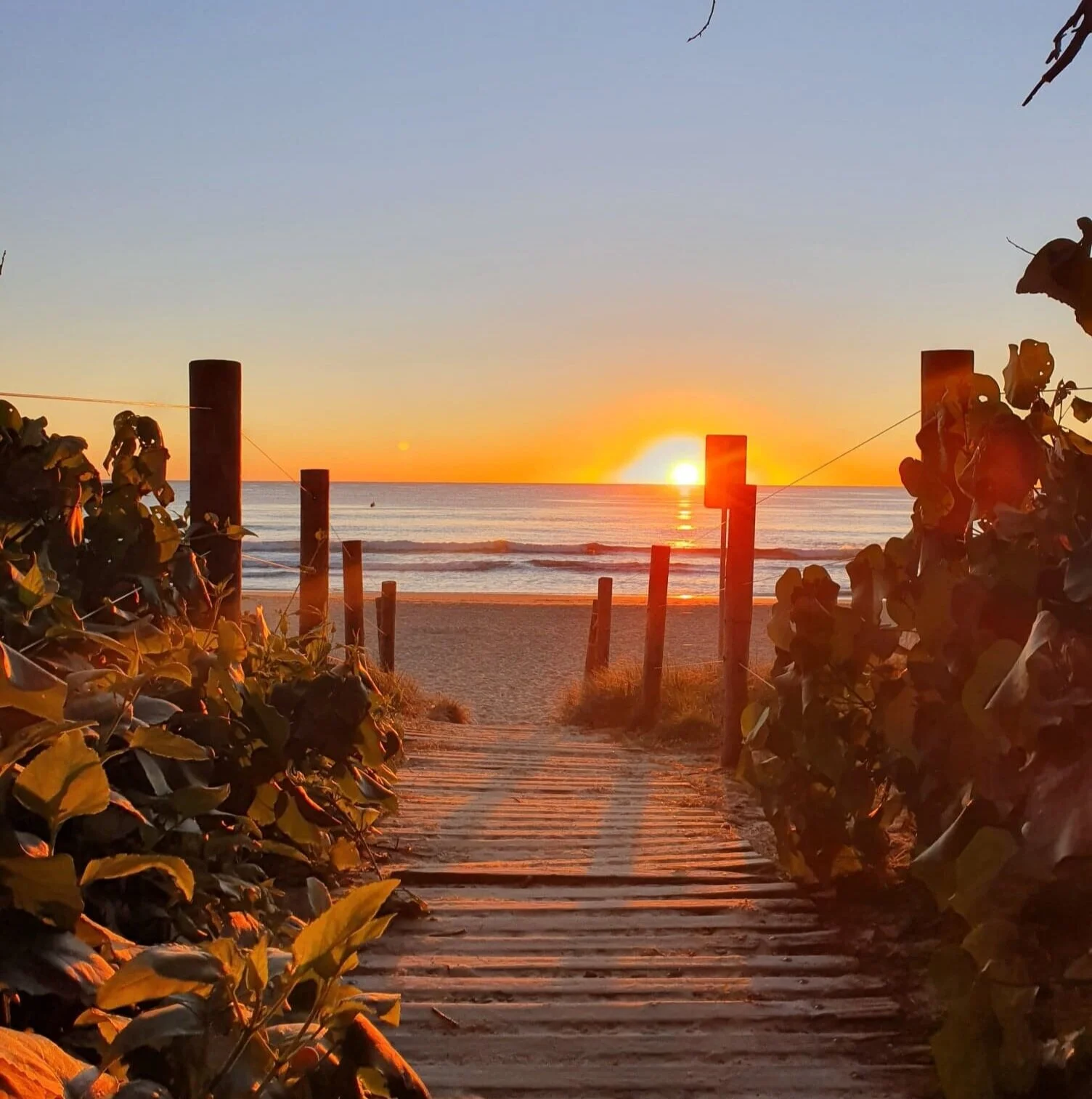
Where is your favourite spot?

Ewen Maddock Dam
Nestled in among 200 hectares of lush state forest at the foothills of the Sunshine Coast Hinterland is Ewen Maddock Dam.

The dam itself is about three kilometres from Landsborough and not hard to get to by car.
Along with fishing and swimming, there are shared trails for mountain biking, walking and even horse riding.
Fishing from the water’s edge is a popular pastime with the dam stocked with Australian Bass, Yellowbelly, Mary River Cod, Saratoga, Tandans, Spangled Perch and Eels.
At the starting (and finishing) point there is a small carpark where you will find playground facilities for the kids, picnic tables, shelters, free BBQ's and even a swimming area with a sandy beach are all there for you to take advantage of.
In total there are nine kilometres of trails in one direction and the path is generally pretty shady and can be muddy after rain and I would recommend taking some water with you.
We started out on a long walk - around 12km return for us – partially circumnavigating the dam.

The first part of the track starts with a wooden boardwalk and follows the edge of the lake before heading inland along what feels a bit like a fire trail. You pass through tall stands of Eucalypts and other forest trees as well as groves of palms and paperbark trees in wetlands that are buzzing with vibrant blue and burnt red dragonflies.
After a rainy period, I would probably prepare with some bug spray too.
The path itself undulates little but there aren’t too many big inclines making this is a pretty chilled out walk. With no powerboats allowed on the lake it’s a quiet, peaceful stroll and not too busy, especially the further you go.
There is plenty of bird life both on the dam and in the woodland, we spent some time admiring the small birds flitting through the trees.
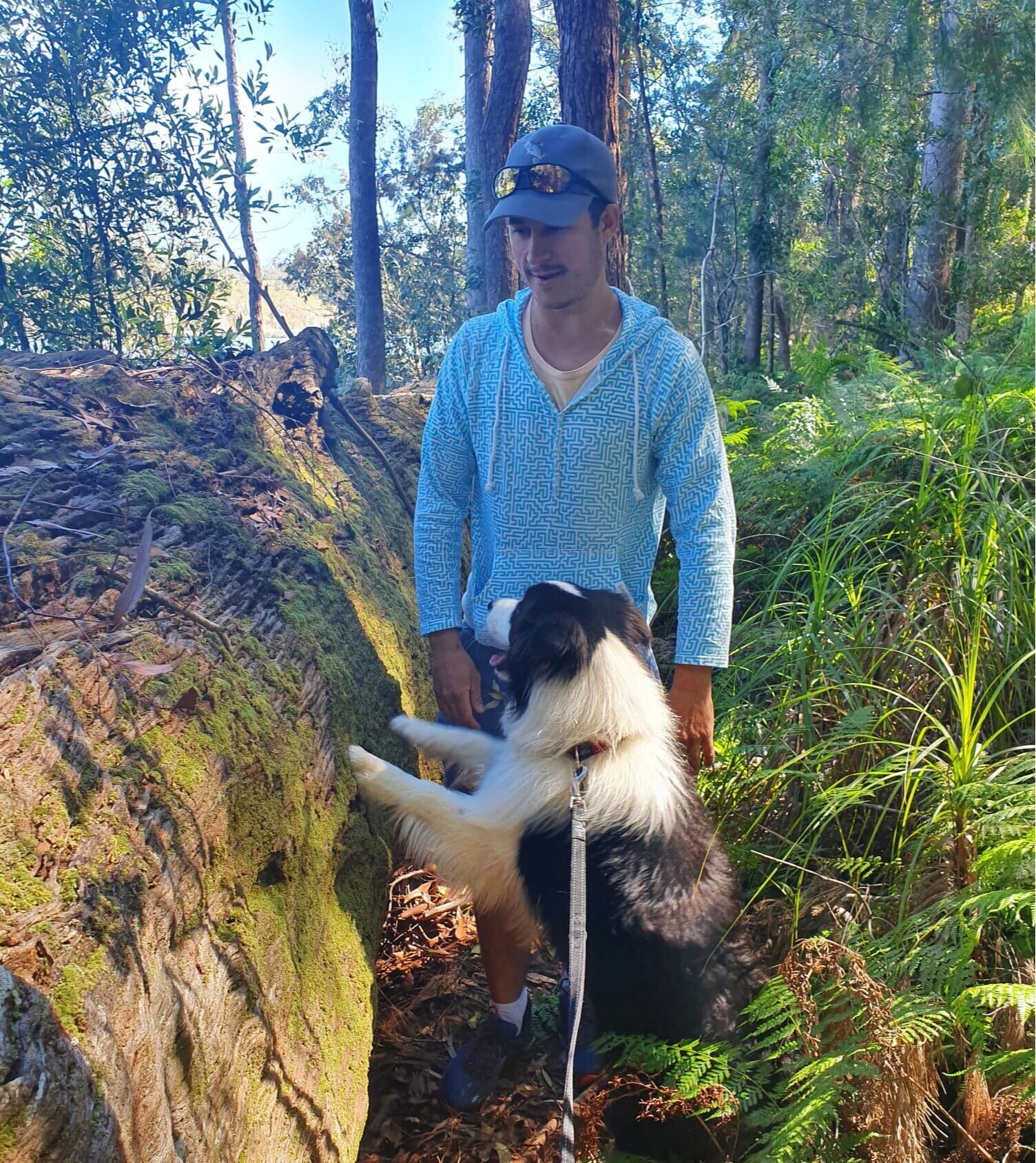
There are a few tracks that branch and loop off the main route, but it is all well signposted and I think you would struggle to get lost.

I have also taken my niece and nephew for a bike ride here, there are a couple more hills at the beginning on bikes as you can’t head out on the board walk but then it evens out. The roped-off swimming spot was a great way to cool off after working up a sweat on the bikes.
As it is not a National Park, animals are allowed! We have taken our pup here for long walks on several occasions. Dogs have to be on-leash, but he did meet his very first horse along the shared trails.


The Blue Holes of Vanuatu
The islands of Vanuatu are full of amazing and picturesque places to swim, but the Blue Holes hidden on Espiritu Santo are next level.
Close your eyes and imagine a natural pool, enclosed by jungle and filled with crystal-clear, pure water so blue you will think it came out of a bottle and that is what you will find.
Some of the holes are the product of freshwater springs trickling from the belly of the islands’ mountains, while some oscillate with the tide, filling with fish that dart in their crystal depths like wondrous, native aquariums.

Nanda Blue Hole
We visited two of the three main Blue Holes on our trip to Santo and I wish we had more time to experience them.
If you are planning a visit of your own, don’t forget to take some cash with you, there’s often an entrance fee that helps cover the amenities provided by the local owners.
Nanda Blue Hole
Our first experience of the stunning Blue Holes was at Nanda – also known as Jackie’s Blue Hole. We exited off the main road heading north out of Luganville and we could have been anywhere!
After paying the entrance fee, we walked a few metres from the carpark and the blue of the water in front was almost overwhelming.
We were lucky enough to have the place to ourselves, and our driver Tusty grabbed some stale bread from the car to show us the size of the fish swimming in this hole. They swam to us as if from nowhere.

Fish coming for a feed
Looking into the water from the convenient boardwalk, you could be forgiven for thinking it isn’t very deep, but the pool is actually 13 metres at its deepest point, and you can see all the way to the bottom.
We had our snorkels with us and spent a good half-hour exploring and cooling off in the clearest blue hole on Santo.
Matevulu Blue Hole
There are a couple of ways to get to Matevulu, by car or by kayak from the river mouth. As we could hire kayaks from our lodge, we opted to paddle for an hour to check out this stunning spot – the largest of the blue holes on the island.

Kayaking to Matevulu
Once we actually managed to get to the river mouth (a lot of hard paddling into the wind), the paddle was actually half the fun of this day, watching the water change from salty to fresh along the 3.5km crystal river. On the paddle in we didn’t see anyone else on the water – such a peaceful experience.
The water at this hole isn’t as blue as at Nanda, but it does have some other things working in its favour.
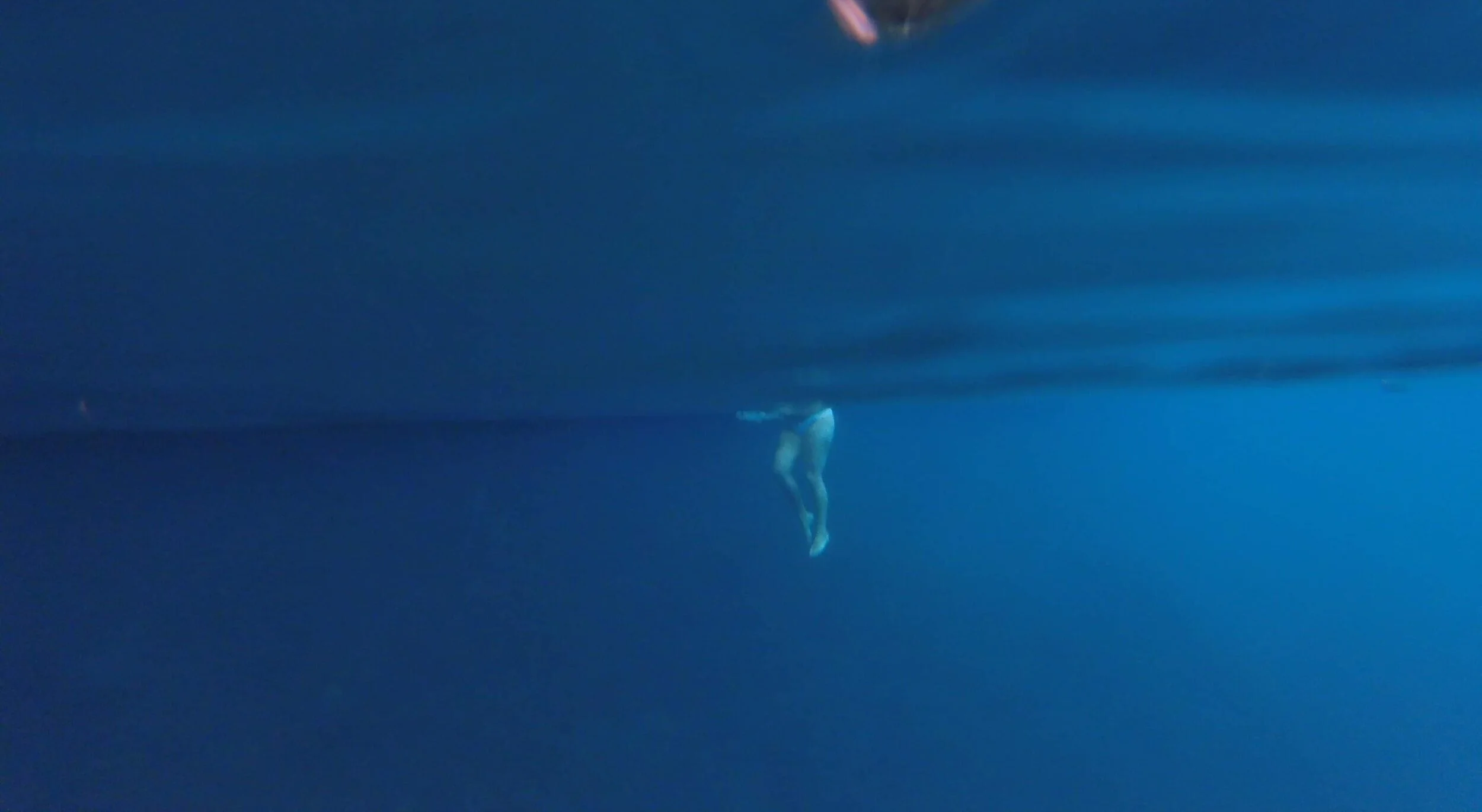
Underwater at Matevulu
In addition to the clear water and freshwater fish, there are two rope swings for a bit of an adrenalin rush. One is hanging from a massive Banyan tree with a wooden ladder to access it, and the other hangs out from a wooden platform.

Rope swing at Matevulu
We did share this visit with a load of cruise ship passengers so it pays to be aware of when these are docking as it does impact the experience a bit.
Riri Blue Hole
We didn’t visit Riri Blue Hole on our visit given all the other things we wanted to do on the trip. We opted out as this is the closest one to Luganville and a further paddle from our lodge.
The Riri Blue Hole is less developed than the Nanda Blue Hole. A small concrete walkway only surrounds one edge, while the rest is a dense tropical jungle. There is also a diving deck and rope swing here as well.
Although they're the most well-known, Matevulu, Nanda and Ri Ri blue holes aren't the extent of the Vanuatu phenomenon. For those prepared to explore, there are blue holes where few other visitors have ever dared to tread. None of these are signposted, and most are on private land, so special permission may be required and additional fees paid.
I am pretty sure any Blue Hole you visit in Vanuatu is bound to be an amazing experience.

Rope swing fun!

Millennium Cave Trek, Vanuatu
Espiritu Santo may be the largest island in Vanuatu but it is definitely still off the beaten track.
Hidden up behind the town of Luganville and away from the aquamarine blue water along the coast are small villages in the hills. This is where we will be heading on our Millennium Cave tour.
You can’t do this trek without the local guides but we saw this as a good thing.

Walking into Vunaspef village
We met Sam at the ‘office’ in Luganville before setting off on our big adventure. His dad is the chief of the village that owns the land the cave is on, and the money goes directly back into their community. Already it has funded schools and training for the locals.
The day starts will a slow drive up to Nambel village, along a wide, pothole-filled dirt track that was once the biggest air strip on the island, built by the Americans during WWII. While you may have to brace yourself for some bumps, this will probably be one of the easiest parts of the day!
For the rest of the day we will be trekking, caving, canyoning and swimming.

Crossing a bamboo bridge.
Aiden and I were lucky enough to be travelling on our own with two local guides who know this land really well. The first ‘trek’ is a 20-minute stroll through the lush green jungle to Vunaspef village where you will be briefed by your tour guide and given a life jacket – not the most comfortable accessory to have in the humidity, but a necessary piece of equipment.
If you have anything you want to keep dry, leave it here to collect on your return! We had a dry bag with us for the essentials and our lunch.
From here on out, this trek is no walk in the park and you will need some degree of fitness to make it out. The ground was muddy and slippery even though it hadn’t rained in days, and soon the grooves in my water shoes designed to provide grip were soon caked with mud. The core was definitely engaged.
We walked along narrow tracks, across bamboo bridges and up and down ladders with slippery handles until we got to a rest point before the descent to the river. Along the way, our guides pointed out different plants and had interesting stories to tell.

The different lines symbolise different elements in nature.
At a clearing, we paused for a symbolic ritual: clay paste applied to our faces to mark our respect for nature and ensure safe passage. The next section involved steep ladders so I hope you aren’t afraid if heights, because you have to look down to make sure you don’t miss a step.

The entrance to the Millennium Cave
Eventually you look up and see the entrance to the cave itself – which is immense.
The cave has a high ceiling and is home to many nesting swallows and some bats, which you see by torchlight as you walk through. The river runs the entire way through the cave and is cool and refreshing as you climb over rocks and wade through the cavern.
The size of the cave means that for most of the trip through, it is pitch black. We stopped at a waterfall in the middle and all turned our torches off to truly experience the extreme darkness.

The exit to the cave in sight!
It takes at least 30 minutes to get through the cave, especially slow going when the ground is a riverbed, covered in rocks of different sizes and flowing water sometimes up to my thighs. I will admit I stumbled twice on this section of the trek but with no injuries other than a slightly bruised knee and ego.

A scenic and secluded lunch spot
You can see the natural light from a distance but the exit to the cave is much smaller than the entry. The final stretch from the cave is to cross the river with the aid of a rope as it is quite deep and fast flowing in the centre. After all that effort, the bank of the Sarakata River is a rest stop for lunch and you definitely have it all to yourself.
From here is was the canyoning portion of the day – although not in the true sense. There were no harnesses and no helmets. Just a few J-bars secured to the rocks to help you up, down and over.
Some sections had a strong current as the river was near some small waterfalls so indeed there was no shortage of hazards here. In fact, I would say this section of the tour was perhaps the most treacherous part, and we really had to pay attention to our guides as well as concentrate on where we were placing our hands and feet. The whole body was getting a workout on this adventure.
I was excited for the next step – the most relaxing and the obvious reason for our life jackets. We spent the next 20-30 minutes floating down the river, past some epic waterfalls, looking up the overhanging rock faces.
Unfortunately, what goes down must go back up, so there is some hard work to do to make it back to the villages.
We climbed up a small, slow-flowing water that seemed tailor-made with hand and footholds before finding some more of those almost vertical ladders to take us higher. It is about 20-minutes of just moving ‘up’. I was feeling the workout at this point, especially with the extra weight of wet clothes and a life jacket to carry.

One of many ladders climbed on the day.
Once back at Vunaspef village, we enjoyed some of the freshest fruit- literally picked by our guides on the walk - and some coffee before walking back to Nambel village for the pickup that took us all the way back to your accommodation.
This has to be one of the most epic treks I have done with so many different aspects. I also couldn’t bend my legs properly for a day or two afterwards – swimming in those blue waters helped though.
See for yourself and book accommodtion here.

The view on the walk back to the village.

Kuang Si Falls
No matter what TLC says, I will always go chasing waterfalls and that is exactly what Mandy and I did during our visit to Luang Prabang in Laos.
There are a few ways to visit Kuang Si Falls – about 30km outside of town – on a tour, hire a private car or tuk tuk or sharing a trip with others.

We wanted to be on our own schedule so opted to hire scooters and make out own way there.
Once we managed to find our way out of town – not too difficult and we stopped for an early Café Laos to get us going – we found a scenic drive on paved roads that took us through small villages and hilly terrain. I think we both thought that if the waterfalls didn’t live up to expectations, the ride out there was still an incredible way to spend a day.

We stopped in one of those small villages for more coffee and something to eat and it truly felt like we were experiencing a little bit more what real life in Laos looks like.
When you get to the falls themselves, there is a market outside where you can buy water or fruit or even some souvenirs.
There is an entrance fee of 20,000 kip – around $3.50 – which you have to pay in cash when you get there to actually enter the falls.
As you walk through into the lush forest you start to spy the first pools. Tiny cascades tumbled over limestone walls into magnificent natural grottoes. All around was lush foliage and dense jungle.

We stopped to take loads of photos before realising this was just the beginning and the falls become even more breathtaking as you go further in. All just a trailer for the main event.
Kuang Si Falls is a 3-layered waterfall and the mains falls has a drop of 60 metres! Photos definitely don’t even begin to do this place justice.

The main falls
For the most part, visitors to the falls will congregate around the lower pools and picnic area, venturing perhaps as far as the small wooden bridge that offers stunning and unobstructed views of the main waterfall.
To the right of the wooden footbridge there are some almost-hidden steps that lead the way to the top of the waterfall. The hike up will take about 20 minutes and isn't too taxing in terms of steepness, however after recent rains, we found the terrain a little tricky and definitely slippery in parts. Pretty sure sheer dumb luck is the only reason I didn’t end up on my butt, particularly on the way down.
At the top, there’s a beautiful calm pool shaded by big trees. You can stand on a rickety wooden bridge and watch the water gushing over the edge of the cliff and down to the waterfalls for a different perspective.
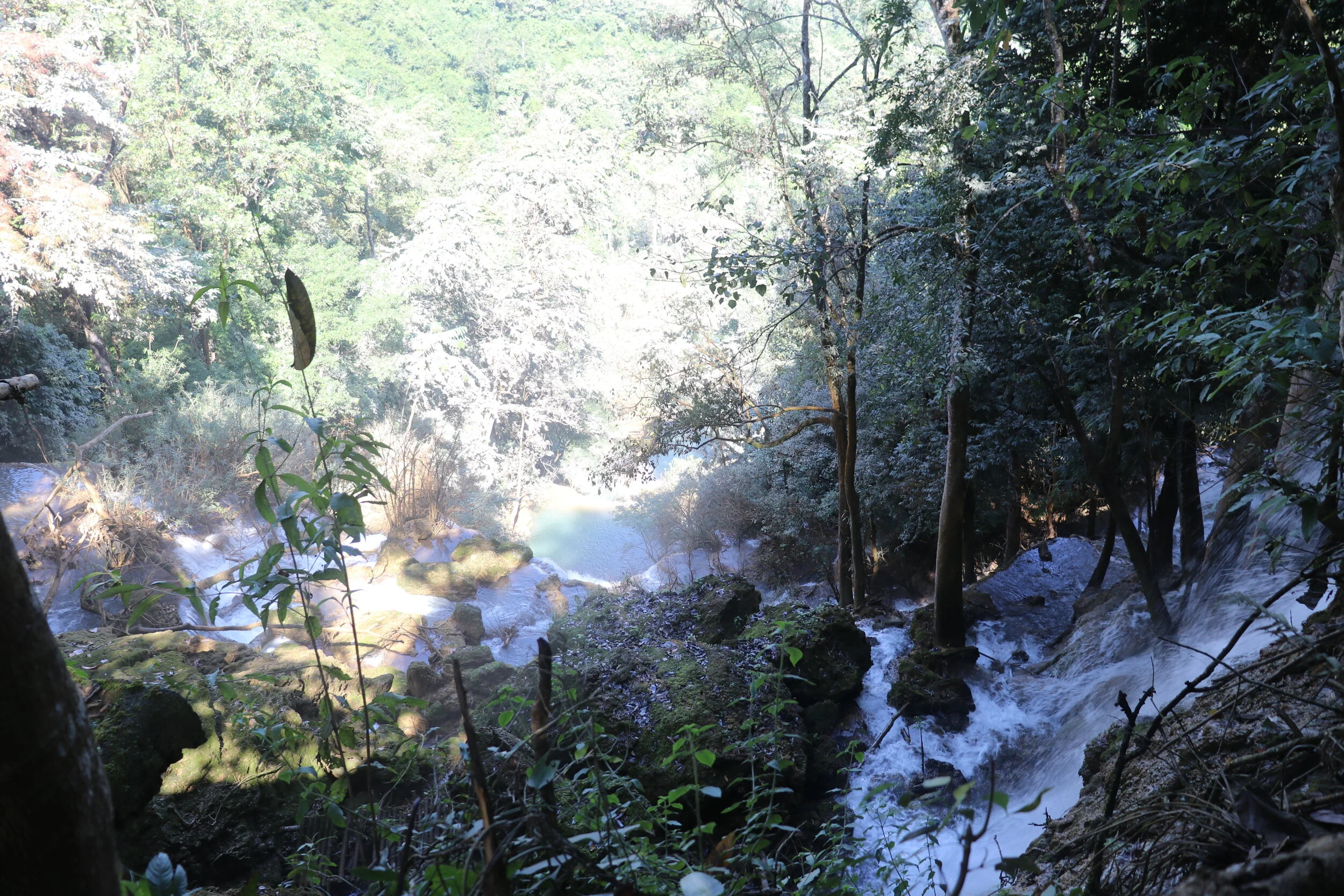
View from the top
The best part about the Kuang Si falls is that in addition to being mind-blowingly beautiful, you can also take a dip in those same tiered pools of turquoise blue water – a refreshing highlight after hiking to the top in the humid air!
Before visiting, a lot of brochures and guide books recommended spending about two and a half hours at the falls, but we found this wasn’t nearly long enough and spent the best part of a day. getting there, exploring, hiking, swimming and making our way back to Luang Prabang in time for sunset over the Mekong.

Lagoons and bridges at the top of the falls

Diving in Cambodia
Diving isn’t the first thing that comes to mind when you think of a trip to Cambodia but on this trip, we wanted to see what it was like.
After some research on options, my travel buddy Mandy and I decided to add a trip down to Sihanoukville in Cambodia and see what we could see, under the sea.
Sihanoukville itself was once known as a sleepy beach town on the edge of the Gulf of Thailand but the years and Chinese investment have not been kind.
A decade ago, the only foreigners in the city were Western backpackers seeking bamboo huts, $1 meals and empty stretches of sand. Now Sihanoukville is a construction site where jackhammers thunder from nearly every corner and they erect new neon signs for high-rise buildings.
We arrived at a town in the midst of development, construction and casinos (!) popping up everywhere. This didn’t immediately make me feel as though a dive trip from here was going to be amazing.

Sunset at Otress II
Thanks to plenty of research on the best places to stay, we had booked a hotel almost as far from the city centre as humanly possible on the beach at Otres II. This meant that aside from interesting tuk tuk rides on unfinished roads with potholes as big as the vehicle, we got to escape from most of this development for the night before and after our dive trip. This was the perfect stop for relaxing – and picture perfect overlooking the white sands and sunset ahead of our overnight dive trip with Scuba Nation.
An early start took us back to town where we geared up and headed down to the harbour with our two dive masters - Max and Allison – along with three other divers.
The boat ride out to our anchorage destination of Koh Tang was about 4-5 hours. This location means fewer divers and better visibility, making it well worth the trip.
The overnight trip includes five dives, two on the first day, one-night dive before dinner and two more the following day. The boat moves around and picks the best spots based on conditions.
We saw no other dive boats or divers the whole trip!

On the first dive at Fly Bye Reef, I was initially disappointed there wasn’t more colour but then the sheer abundance of sea life was amazing. I saw more moray eels on that dive than I have on all my other dives put together!
Dive number two was at Monkey Island, a drift dive and this is where my ears started to hate me as we moved up and down with a maximum depth of just 13 metres. I do remember some cool corals though.

Due to my ears playing up, I missed the night dive at Koh Tang bay which I was gutted about but Mandy tells me it was an awesome drift dive with very active sea life including a bamboo shark.
This dive trip is no luxury cruise and there is one bathroom with a boat shower and the upstairs deck transforms into the open-air bedroom with weather-protection tarps that roll down at night. It is very much like camp but since you are exhausted from diving and snorkelling, falling asleep to the gentle swaying of the boat is easy.

Our ‘bedroom’
The second day started with a pre-breakfast dive at Explosion Reef – so named because the staghorn coral provides a nursery for a variety of juvenile fish species, giving the impression of an ‘explosion’ of colour as they mingle with other marine life. The group headed down for another dive on Explosion Reef after breakfast - I opted to snorkel after what turned out to be a reverse equalisation that caused a lot of ear pain the night before. Luckily Explosion Reef is only about nine metres at its deepest and visibility was amazing, so there was plenty for me to see from the surface and with the water being a gorgeous 28 degrees I was happy to follow all the excitable black and white fish as they explored for and hour.

Tanks ready to dive in!
We enjoyed a quick lunch before starting the scenic boat ride back to Sihanoukville.
Our experience with Scuba Nation was awesome and the diving was great. The only dark spot on this trip was the regular sightings of Vietnamese fishing boats. These guys are very into their blast fishing – illegally. One of these was so close to our morning dive site that we could see onto the ship and we weren’t very impressed. You can see the effects the blast fishing has on the corals in the area.
While I won’t be rushing back to Sihanoukville any time soon, the memories of the dive trip are definitely worth the effort.

Sunrise from the boat

Angkor Zipline
Did you know that you can zipline and canopy walk while you are visiting the temples at Angkor?
Due to a cancelled flight we ended up with an extra day and night in Siem Reap. Feeling a bit templed-out but still wanting to do something we ended up booking a half-day trip out to Angkor Zipline to try something different.

Besides its famous temples, the Angkor Archeological Park is also home to a huge stretch of barely touched jungle and zipping through the trees is an amazing way to see it.
We opted for the Gold Eco-Adventure Canopy Tour which includes a set meal lunch and guided nature tour after the exhilarating zip-lining which we had to skip in order to get to the airport, but we still felt we got our money’s worth.
After being picked up from our hotel, the morning started travelling down a dirt track near Angkor Thom before gearing up and getting a safety briefing.
My friend Mandy and I were lucky to get basically a private zipline tour with two guides, Visot and Noy, along with our photographer Rosath! They were knowledgeable and enthusiastic and made the adventure even more fun. Their grins were as big as ours as we made our way through the treetops.

It was a warm and humid morning – as always in Siem Reap – but whizzing from platform to platform is a great way to make your own breeze.
Some of the platforms were connected not by zip-lines, but by bridges instead. Seriously, you try walking on one of those Indiana Jones-inspired walkways gracefully in your helmet and harness and I’ll buy you a beer.
In total we experienced six single ziplines, two super ziplines, one double zipline - the best for posing with your bestie mid-flight - and an abseil to the ground for the grand finale.

An interesting fact to note is that this is a true eco-experience which you can see up close when you look at the construction of the platforms and how the 800-year-old teak trees support it. Being inside the UNESCO World Heritage zone is something of an achievement and every part of construction is 100 per cent environmentally sustainable with no impact to wildlife, vegetation and fauna. Not a single nail or cord directly touches a tree.
While we didn’t see any on our visit, a family of endangered gibbons have been reintroduced to Angkor park in this area and all reports are that these shy primates are thriving in their new home.
Angkor Zipline also promotes low-impact visitor behaviour and limits each group to a maximum of nine guests. They also demonstrate a sensitivity towards, and appreciation of, local culture and biodiversity by funding English teachers and supplies for over 100 children and monks daily.
Cambodia’s Forestry officials inspect and approve the course every year because to ensure it is safe and protective of the environment.
This was a fun and enjoyable way to spend an unplanned extra day in Siem Reap and I would recommend it if you have time on your next adventure.
