


Malta’s Gems: Exploring Gozo
Tucked away between Sicily and the North African coast, Malta is the ultimate Mediterranean escape and while small, the country is made up of more than one island.
The islands of Gozo and Comino to the north are hidden gems just waiting to be discovered.
We started our adventure with our bags on board a fast ferry taking us from Valetta to Gozo, docking in Mġarr – this is where we were basing ourselves for the next couple of days.

Elevated pool at Grand Hotel Gozo
The port in Mġarr looks small but busy and charming and I was glad to see some restaurants around, meaning we wouldn’t have to travel for our evening meals.
Having spent a couple of days exploring the cities on the main island of Malta, we didn’t want to be landlocked and felt this was a good base and checked into the Grand Hotel Gozo with views across the harbour.
After arriving, we immediately wanted to get out and explore so we headed for a coastal walk from the port along the cliffs to Gorgun Beach.
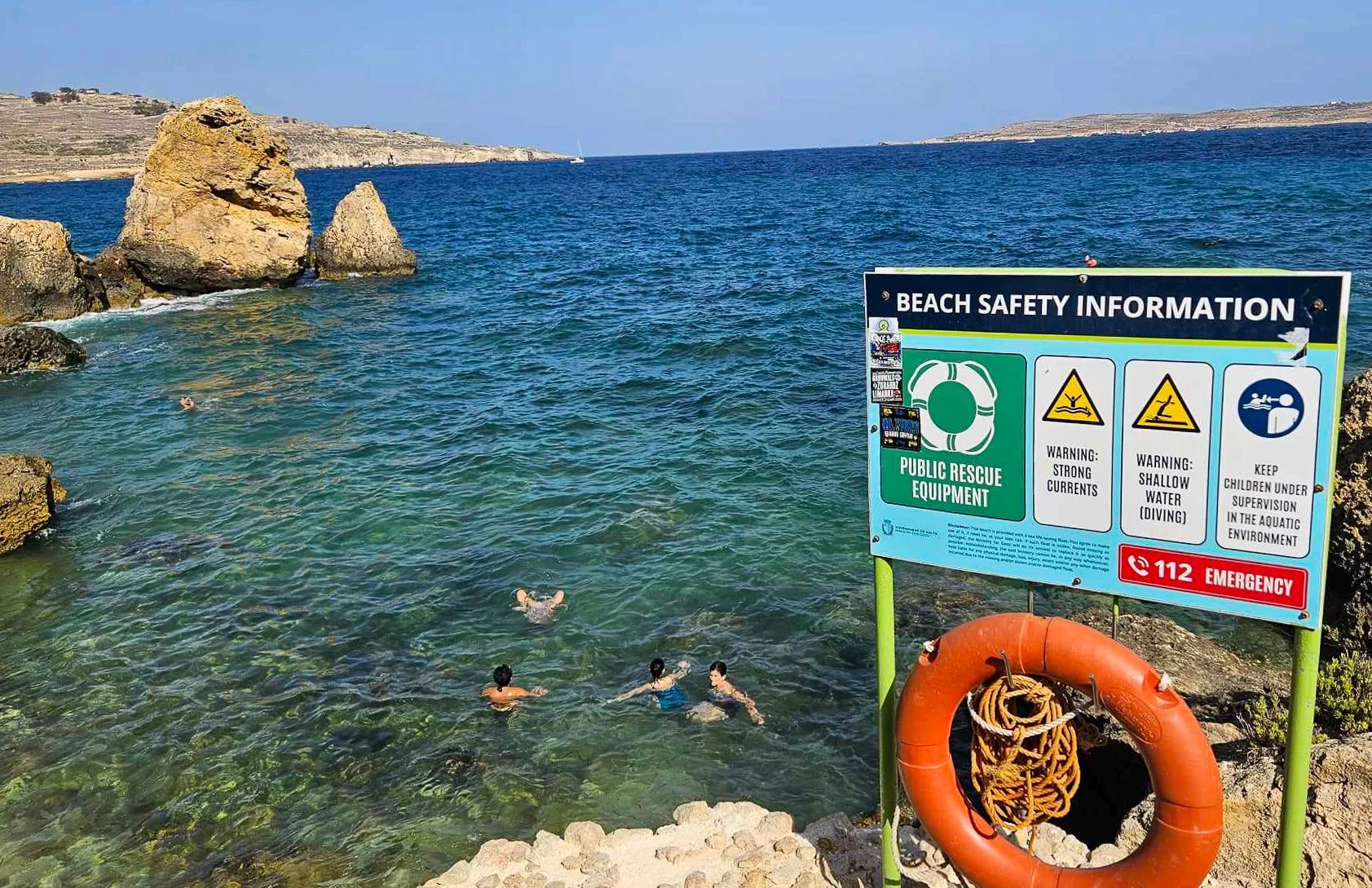
Gorgun Beach
I am not sure the word ‘beach’ really applies here but the walk was scenic and hot so there was no way we weren’t swimming.
Shoes are recommended as you make your way down some stairs and across some large and slippery rocks to make your way into the water. The day we were there, there was a bit of swell so had to be super careful getting back out.
The next day was the day to explore further afield. We had booked some a buggy through Gozo Quad Hire for the whole day. We self-drove but you can join a tour as well.
The guys came and picked us up from our hotel first thing in the morning and after a quick briefing, we were on our way.

Our ride for the day
The first stop was Grech’s bakery for a sweet donut and an espresso to fuel us for the day.
We had decided to do a lap of the island starting on the eastern side and heading north. This took us to Hondoq ir-Rummien where we stopped for a look around and enjoyed the view. We were there very early with not many people around and offering crystal clear water, but we were quite ready for a swim yet.

A moody morning at at Hondoq ir-Rummien
Next up, we headed down a winding road to Daħlet Qorrot Beach. I almost don’t want to share this spot because it was magical, and we could have spent all day here.
There were no other tourists, just locals out for their morning walk and swim and a few people learning how to dive.

The most inviting water at Daħlet Qorrot
The word hidden gem gets thrown around a lot, but this beach truly lived up to the phrase. The pebbly cove is surrounded by lush countryside and bordered by carved cliffs resulting in the perfect sheltered bay for swimming and snorkelling. The peace and the quiet here without shops or buildings is unmatched in the Mediterranean.

Rocky views at Daħlet Qorrot
After dragging ourselves out of the sea and on our way, knowing that our buggy maxed out at 50km/h and while small, we wouldn’t make it around the whole island if we dallied too long, we headed for Ramla Beach.
Passing a vineyard on our left and stalls on our right, we headed down a straight, flat road – such a novelty for the island and ended on rich red sand.

The red sand of Rambla Bay
This beach was much more developed and busier than where we had just left so we felt we didn’t need a swim (plus the sand was scorching hot) so walked down for a look and then headed back for a refreshing beer overlooking the calm ocean in front.
By now, I was getting a little hungry, so we pulled up in Marsalforn for some lunch. We opted to find a spot away from the restaurants lining the bay and tucked into some incredible Thai food a couple of streets back.
Long before visiting Malta, I had seen images of Xwejni Bay and the salt pans but nothing prepares you for seeing it in real life.

Selfie at the salt pans
The Xwejni salt pans stretch three kilometres along the coast and have been used for more than 350 years. A salt pan is a shallow reservoir dug out of limestone rock to collect seawater. As the water evaporates, white salt crystals remain. The crystals are then dried and packed into salt pouches – collected about once a month in summer and it is incredible to see it in action.

Salt pans
After exploring here (from a distance as you cannot walk on the pans themselves), we headed to another spot I absolutely had to see for myself - Wied il-Għasri.
Driving down a dirt road and parking wherever we could find a spot out of the way, we headed in the direction of the sea. Before you make it, you can see a fissure in the land ahead.
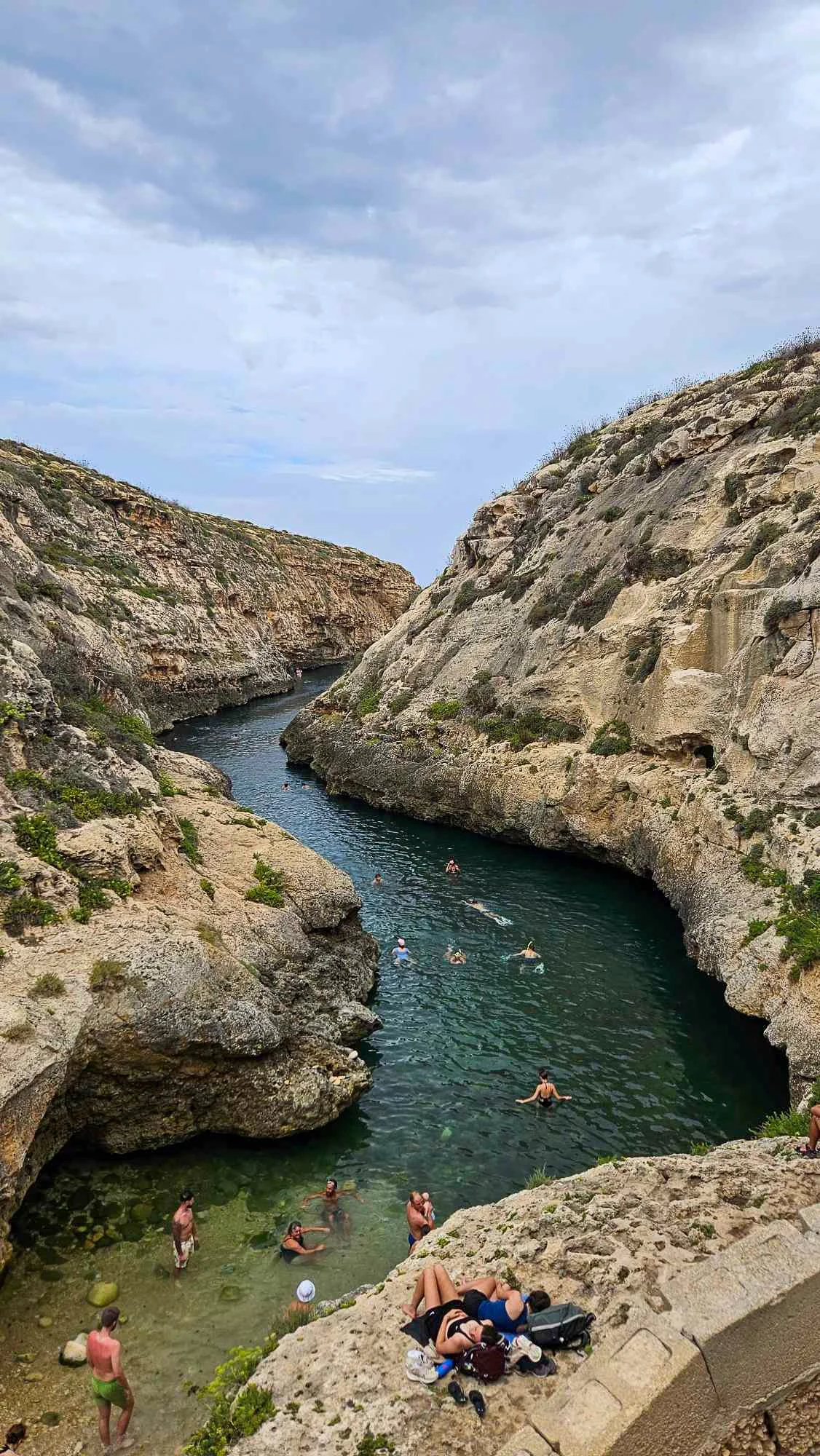
Wied il-Għasri
Wied il-Għasri resembles a canyon and stretches 300 metres inland to a tiny pebble beach. To get down, you walk down about 100 steps carved into the porous walls of the sandstone.
Like most, we have to stop in awe as the winding bay appears before us on the way down. Towel down and slow stumble to the water’s edge across the soft pebbles (we had no water shoes) and into the clear bay we float.
Over the years, the swirling sea has carved out the sides of the gorge, creating caves and pockets beneath the water's surface. We swim almost to the mouth of the gorge but, feeling the pull of the current on our toes, stay safely away from the wide-open ocean.
After a relaxing swim (although it was quite busy when we visited in peak summer), it was on to what would be our last stop for the day.

Swimming near Dwerja
If you google Gozo, you will probably see images of a rock arch over the sea. Unfortunately, the 28m tall Azure Window collapsed into the ocean in 2017 but this part of the coastline is still spectacular and worth a visit.
In addition to the Inland Sea – a natural sea pool connected to the sea by an 80-m long tunnel – this exposed part of the north-western coastline is dramatic and wild. It was also a filming location for season 1 of Game of Thrones!

Inland sea and cave entrance
We wanted to make a stop at Xlendi Beach and Victoria on the way back to our hotel but we had run out of time needed to return the buggy! We drove slowly through Victoria to get a sense of the city and got back just on closing time and the guys dropped us back to Mġarr so we could refresh and have a cocktail while we relived the day’s highlights.
It is crazy that you can fit so much to see on one tiny island and we didn’t even get to explore it all!

Dinner views in Mġarr

Traversing the breathtaking Path of the Gods
The Amalfi Coast in Italy is stunning from any angle but hiking along the clifftops of the Sentiero degli Dei (the Path of the Gods) offers up unbeatable views.
The official path runs from the small mountain-top town of Bomerano and finishes in Nocelle but you can continue (as we did) down the 1700+ stairs to end up 500 metres below in bustling Positano. Just prepare your legs for that finish!
It is recommended to do the hike in this direction to make the most of the views but also as this way has less uphill so is a little easier on the legs.
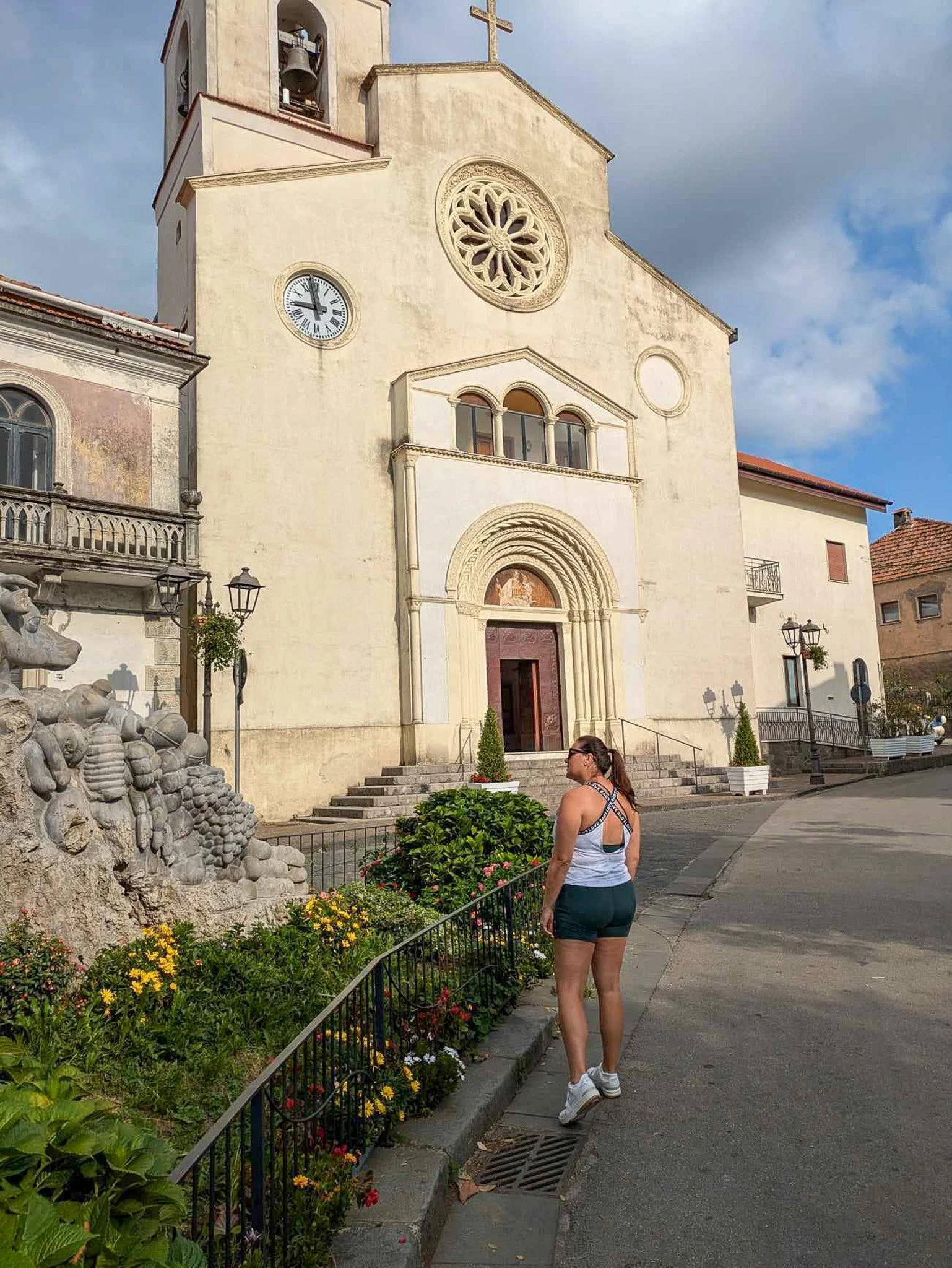
Appreciating Bomerano
This has to be one of the most beautiful walks but honestly, it is probably not for the faint of heart in the Italian summer heat and there is some up and down as you hike along.

Spectacular views along the way
We did this hike in August 2024, and it was HOT. We caught one of the first morning buses from Amalfi town to take us the 40 minutes up the winding mountain roads to do as much of the hike before it got too hot.
The only catch with this early bus is that we did have to hunt to find a place that sold bus tickets at that time, we ended up finding a café in Amalfi that sold them but only if we grabbed an espresso as well – cash only too for those that are wondering.
The bus dropped us near the main piazza of Bomerano and we grabbed a mozzarella roll and another espresso to fuel us for the walk ahead.

Breakfast in Bomerano
You walk out of town a little to the official start of the trail. From there, the trail is easy to follow—look out for the red and white lines that mark it along the way. Follow signs for Sentiero degli Dei, trail #327 and after about 800m you will be at the official entry to the hike.

The official start of the Path of the Gods
We had a day of bright sunshine and there isn’t too much shade along the way. I was grateful we had packed loads of water and sunscreen with us for the morning out.
The trail itself is a mix of graded dirt and gravel trails, up and down large stone steps, and over rockier, uneven trails – we were passed by a herd of goats that are clearly more accustomed to this kind of terrain!

The path is right on the edge
About two kilometres in, there is a fork in the road, an option for those that are truly afraid of heights to take a slightly different path to Nocelle. The main cliff path with the spectacular scenery is #327, and #327a will take you on a less exposed path.

Epic views
This is where the trail really delivers the views. We really took our time over the next couple of kilometres, soaking up the Amalfi Coast vistas. The dramatic peninsula seems to stretch forever in the distance.
Alongside the breathtaking clifftop, we passed by terraced farms, lush vineyards, and fields of wheat.
Along the way, there are a couple of water points and picnic benches were excellent places to stop for a breather and enjoy the views. We actually stopped at what felt like just after half way for a frozen lemon drink at what looked like a shack on the edge of the cliff. I later discovered that this eclectic construction is called Ulisee’s House and was perfect for cooling off a little in the shade.

Inviting us in for a cold drink…
As we got close to Nocelle, we could even see the Island of Capri in the distance.
Nocelle is a tiny village but we stopped at a little restaurant/bar as we entered the town that offered incredible views. A couple of cold beers at Il Chiosco del Sentiero Degli Dei were just what we needed before tackling all the stairs to Positano.

A beer with a view in Nocelle
Thankfully the views on the way down are worth the burning quads but I did have to stop a few times to take a little break.

Directions are easy to find
Once you reach the bottom of the stairs, you actually have to walk along a part of the winding road to get to Positano. I probably found this the most stressful as there is no footpath and the road seems barely wide enough for one car!

Some of the stairs down to Positano
After a day of seeing very few people, the teeming masses as we encountered as we walked in to Positano was a little overwhelming. We stopped at a restaurant along the way to grab a bite to eat and another cold drink. I couldn’t even tell you the name.
We wandered around for a little bit before deciding we needed to head back to our quieter side of the coast. This meant again braving masses of people to find the right ferry to take us back to Amalfi town where we jumped in for a swim before walking back through the pedestrian tunnel to Atrani.

Positano
In my opinion, the Path of the Gods is definitely worth hiking. It’s a beautiful trail that gives you a different perspective on the stunning Amalfi coastline, and if you start early, it’s also a peaceful escape from the crowds that seem to be everywhere in the busy summer season.
The stats:
From Bomerano to Nocelle, it is about 6.5km and should take about two to three hours.
If you are adding the steps down to Positano, allow at least an extra half an hour to an hour as the elevation drops from 450m to 80m.
Total Ascent: 235 metres
Total Descent: 780 metres
Highest Elevation: 650 metres
Lowest Elevation: 80 metres

Cruising Atherton’s Waterfall Way
About an hour out of Cairns, there is a tropical wonderland that has nothing to do with the Great Barrier Reef. And no, I am not talking about the Daintree Rainforest – amazing as that is.
I have been to Cairns many times but never explored the Atherton Tablelands – specifically what is known as the waterfall circuit.
This area is a natural playground of tropical forests, volcanic crater lakes, and rivers rushing towards the coast to create a wonderland of incredible waterfalls and I couldn’t wait to explore them.
We started our day trip after a coffee by heading to probably one of the most Instagrammed waterfalls in the area - Millaa Millaa Falls.

Arriving at Millaa Milla Falls
We got there early and managed to almost have this spot to ourselves to admire the 18-metre drop. It’s not too much of a swimming spot as the water is very shallow until right near the falls but it is awe-inspiring to soak in the majesty of nature.
Access is pretty easy from the top carpark down a short stone walk or if you have mobility issues, you can get to the viewing platform from the bottom carpark.

The Instagram-worthy Millaa Millaa Falls
Our next stop was just down the road at Zillie Falls where we were a little disappointed with the views from the platform.
Access to the platform is pretty easy, across the road from the carpark (but with no crossing so be careful!)
The view is quite restricted, not really looking down at it, but not looking across it either, it’s yet another view that doesn’t allow you to take in the waterfall’s full beauty.
We weren’t able to uncover any sort of official track down to the base of Zillie Falls and given we were there smack bang in the middle of wet season, it didn’t seem like a good idea to try and scramble down the rocks.

Ellinjaa Falls
Our final waterfall on the ‘official’ circuit was Ellinjaa Falls, and it was probably my favourite.
A short zig-zag walk from the carpark brings you out to a beautiful view of the falls. To get in the water for a swim, you do have to carefully walk over the shallow rocks to get to a space deep enough to swim.
We ended up having this beautiful waterfall all to ourselves, laughing and squealing as we swam through the powerful falls to discover a private cavern behind, unable to hold a conversation because of the thunderous noise of water crashing down from 12 metres above.

Playing behind the falls at Ellinjaa
On our drive back to Cairns, we detoured to check out Josephine Falls. The walk to see this incredible feat of nature is a bit longer – around 1.2km – but it isn’t strenuous and the surrounds are lush and rainforesty.
Josephine Falls is a popular tourist spot with a natural waterslide drawing people in.
Unfortunately for us, there would be no swimming (or sliding) down these falls for us as the water levels were dangerously high after crazy rainfalls the week before we arrived.

Powerful Josephine Falls
Nationals Parks have even installed an alert system here with closeable gates and coloured lights to indicate when water levels aren’t safe –people have lost their lives. With too much rain it becomes dangerous to swim but the tradeoff comes in the ferocious views, the loud screaming torrent and the furious deluge you are able to witness.
Deciding we needed one last swim before retiring from chasing waterfalls for the day, we drove just down the road to Babina Boulders and the Devil’s Pool.
The Devil's Pool walk is a 1.3km return walk along Babinda Creek downstream from the Babinda Boulders picnic area and carpark. The walk isn’t difficult, slightly undulating along a rough bitumen track, the walk leads through the rainforest to two viewing platforms where the creek cascades down a series of spectacular waterfalls, granite boulders and washpools.

Frolicking at Babinda Boulders
There is no swimming down this end of the creek, despite how tempting the deep pools amongst the boulders look. There’s a barrier on the lookout point and warning signs about the dangers of swimming here.
After walking back, take a different turn from the carpark and you will find one of the calmest and most beautiful swimming spots. I could spend a whole day here.
Imagine a beautiful creek with crystal clear water that weaves around huge boulders. Even during the hottest days in summer, the water here is still quite cool and perfect for a refreshing swim.
We found a rushing current we could jump into and float along before getting back out and doing it all again like the big kids that we are.
While we didn’t visit on that same day, the day we were flying out, we made an effort to see one last waterfall.
Crystal Cascades is a series of water holes and waterfalls along Freshwater Creek in the Baron Gorge National Park, 17 kilometres from Cairns.
An easy 1.5-kilometre walk along the creek will bring you to several cascading waterfalls and a large swimming hole and the morning we went, we had the place to ourselves!

Crystal Cascades
We didn’t swim at the top end of the falls with the rushing water looking a bit too intense but jumped in for a dip at one of the swimming holes we had passed on our way up to the lookout to cool off from the March humidity.
If you are looking for a unique waterfall experience in the area, Emerald Creek Falls is amazing!

Wild swimming at Emerald Creek Falls
In an area known for its waterfalls, Emerald Creek Falls really stands out as a wild gem.
You won’t find this adventure on far north Queensland’s Waterfall Way but, it’s worth the drive out from Mareeba along a gravel road.
Emerald Creek Falls is actually very different to a lot of the falls you will find around the Atherton Tablelands. Instead of lush rainforest, you will find a series of cascades over rock slabs, surrounded by Aussie bushland.

Unexpected landscapes in tropical north Queensland
The walking track is around 3km long if you visit all the spots, but the scenery starts at the carpark with the creek running right behind it – so if you can’t wait for a swim, start here!
We walked all the way to the lookout at the top and it was warm at the end of March. As mentioned, the area here is a bit different so you don’t have the sun protection from any rainforest and there is no shade the whole way up.
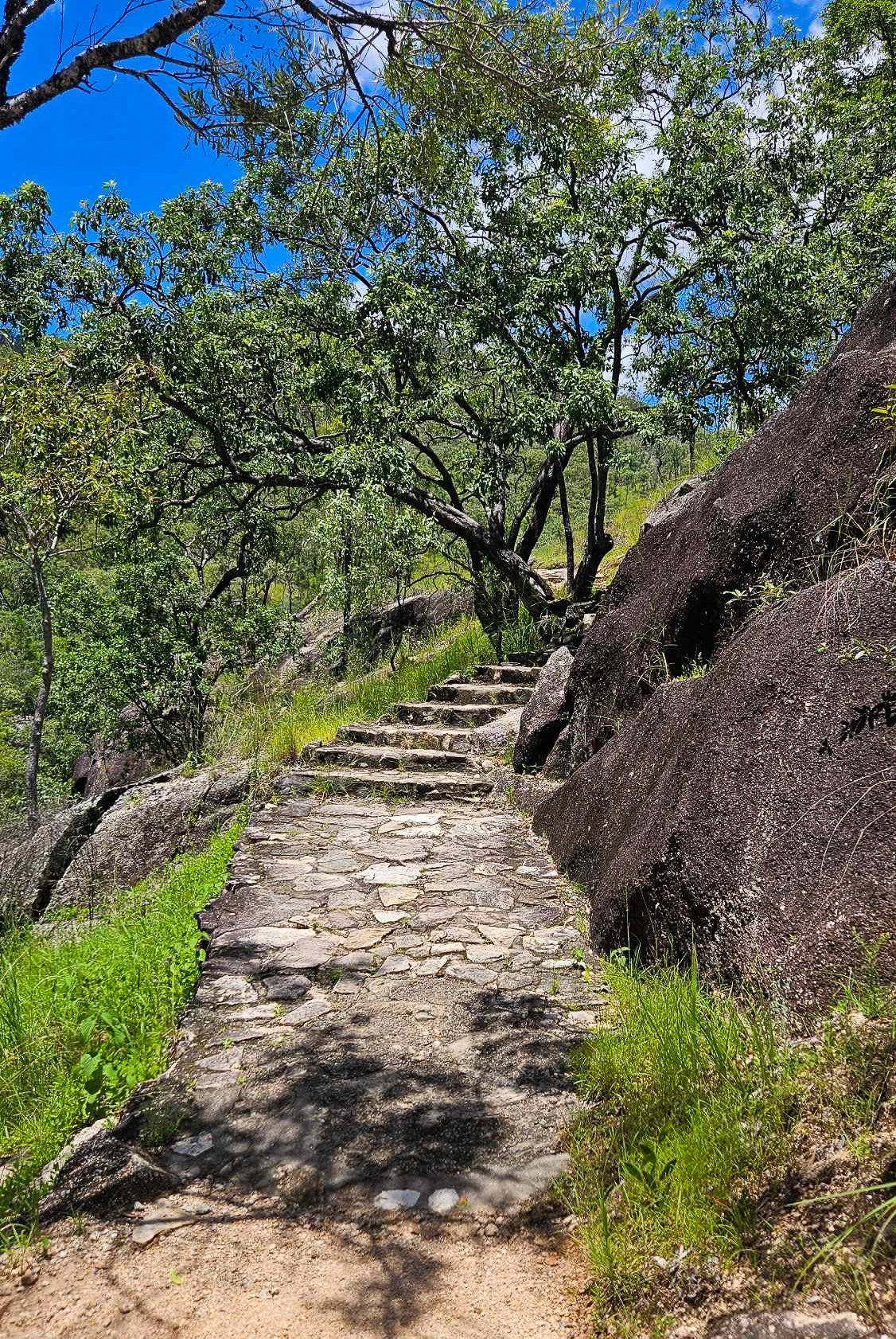
The walk up has some steep sections
The landscape on the walk up is quite nice, the large boulders, green bushes and the sound of the waterfall and streams are welcoming signs of nature. Most of the area is quite dry and dusty which makes for an interesting contrast to the creek and water flowing from the cascades.
The lookout itself is a fenced platform and we could feel the power and spray from main waterfall drop.

The view from the lookout at the top
After reaching the top, we headed down about 350m, turning at the sign marked ‘Bottom of Falls,’ to the best bit of a visit to Emerald Creek Falls – the swimming holes!

Helpful foot bridges at water crossings
Once you veer off the dirt path, blue arrows will guide you across the giant boulders (that can get a bit slippery with wet feet) and a couple of foot bridges to the main swimming hole. As we were visiting after some seriously heavy rains, we decided that the large pool was not safe for a swim – the water was flowing pretty hard here, and we couldn’t see into the pool.

Heavy flows into the upper falls
The good news was that around the upper falls here, there were plenty of small crevices that made the perfect cooling off spot – not to mention a pretty spectacular photo opportunity.
After cooling off here in our private spas, we headed down further to the lower falls where there were plenty of people enjoying a proper swim in the deeper pool, so we jumped in and appreciated that cool, refreshing water.

Relaxing on the rocks surrounding the pools and listening to the rush of water from the falls above is amazing way to spend time in nature.

Relaxing on the rocks
A nice finish to our day out was when we stopped for an ice cream on the way back at Emerald Creek Ice Creamery. They even make dairy-free sorbet using local and seasonal fruit which is always a nice treat on a summer day.
How to get there:
A very easy day trip from Cairns, it will take you about 1hr 15mins to make it to the Emerald Creek trail – noting that the last 8km or so is dirt road. In the dry conditions we had, it was no drama in a regular car, but I can imagine that in the wet, you might want the added safety of a 4WD.

The scenery is dry and bushy
Don’t forget those snacks. There are plenty of flat and shaded areas around the swimming holes to relax and spend the day in this special part of nature.
Locals with furry pets should also know that this beautiful spot is in a State Forest and therefore dog-friendly so your pooches can come and enjoy it too.
Hire a car here to visit these falls yourself on your next Cairns holiday!

Walking to Montezuma Falls - Tassies tallest waterfall
Western Tasmania isn’t short of hikes but it is also home to Tassie’s tallest waterfall. Even better, the hike to get there is a relatively easy one!
Montezuma Falls is actually one of Tasmania’s ‘60 Great Short Walks’ and can be completed in about three hours return. However, the falls are so spectacular, you might lose some time just staring in amazement and soaking it all in.

The trail entrance is easy to spot!
We stopped here on a drive from Strahan to Cradle Mountain, using the 11.5km return walk to stretch our legs (or warm up for Cradle Mountain!)

You lose light pretty quickly in this old mining entrance
The walk follows a former tramway through wet, steep, thickly forested country and you can see signs of the mining history of the area as you wander through. Keep an eye out for a small entrance to an old mining tunnel. We walked in about five metres and lost light straight away so this is not for those with a bout of claustrophobia…
The track is really well-maintained and – this will appeal to many non-hikers – mostly flat! If I lived on the Apple Isle, I can promise I would be here a lot as you can even take your dog on lead which seems a rare experience for good waterfalls hikes as they are mostly in National Parks. We passed a few very happy, and slightly muddy, pooches on our visit.

The muddy but well-maintained trails
Despite seeing a couple of dogs and their owners, we pretty much had the trail to ourselves which is a rare treat!
The track follows the Ring River and offered up some great views down into the river valley as we walked along – my mate Catherine and her long legs setting the pace.
As with many tall waterfalls, you hear the roar before you see them. This is especially true of Montezuma as the 104m drop is tucked away around a corner.

Epic views from the base of the falls
We headed straight for the base of the falls and admired the power of Mother Nature for a while. The view from the bottom is incredible and there is plenty of space to put down your stuff and take some photos. Looking up, Montezuma Falls spills down the steep cliff in several stepped tiers.
After soaking in the view and getting a little spray we made our way to a suspension bridge over the gorge that is just before the falls.

Lust vegetation surrounds the bridge
Walking across the narrow bridge (just wide enough for one person) offers up both a different perspective of the falls, and incredible views through the valley. It really shows you how immense Montezuma Falls is.

Viewing the falls from the bridge

Crossing the suspension bridge
Once over the bridge, we thought to explore a little further and found a picnic table and what looked like a fire trail. However, with no reception and no idea where it led, we had a snack and headed back to the car.
If you want to visit and stay nearby, your best options are Strahan (65km away) or tie it in with a stay near Cradle Mountain (97km away).
There is so much to do in this part of Tasmania, we barely scratched the surface of the Wild West!

Adrenalin-filled canyoning in Cradle Mountain
A place of jaw-dropping natural beauty, iconic Cradle Mountain is where is on display at every turn.
Cradle Mountain in Tasmania is known for offering up some incredible and challenging hiking trails (you may have heard of the Overland Track…) but there is another way to experience this incredibly scenic part of the world – you just have to be prepared to get a little wet.
A day trip to Dove Canyon with Cradle Mountain Canyons covers all bases. A short hike through the forest, abseiling into icy water, flipping off waterfalls and floating down the canyons.
Your day starts meeting just near the Cradle Mountain Visitor Centre – so there is heaps of parking and somewhere to grab a coffee before you plunge into the icy alpine waters.
After gearing up with about 4 layers of wetsuit, including booties and a hood, the team transport you to the start of a trail. From there it is about a half hour walk along boardwalks to reach what the guys affectionately referred to as the ‘change room.’
The change room is actually just a large rocky area where we spent at least 10 minutes pulling on all our layers of gear including a life jacket and helmet! Your regular clothes will be left here with the drybag backpacks until we hike back out of the canyon later in the day.

Bulky but somewhat warm
Feeling very much like the Michelin man in the bulky getup, we make our way down to the (literal) jumping off point into Dove Canyon. It is hot and uncomfortable now but I will be definitely grateful for the layers later on…
If you have a fear of heights the first step into the canyon – abseiling over the edge – will challenge you – and once down, the only way out is to keep going forward. I definitely got another shock as I make contact with the frigid water below too.
Over the next few hours, we make our way through the canyon by abseiling down cliffs, jumping into chilly pools, shooting down waterfalls along naturally formed slides, and swimming through narrow sections of the gorge.
There is some time waiting below falls until everyone in the group has made their way through each adventure. During this time, I am sure I look amazing standing there or treading water with my hands out of the water trying to get some sun on them to keep feeling. Yes, the water was THAT cold!

The water can take your breath away!
You wouldn’t know it from the amazing photo the Cradle Mountain Canyons team took of me, but an undeniable highlight for me is racing through the narrow Laundry Chute and launching into a deep pool of water below.
Lunch was a welcome break from the icy water and the surprising amount of exertion on a sunny sandy bank. We enjoyed a make-your-own wrap station that catered for all our dietaries.
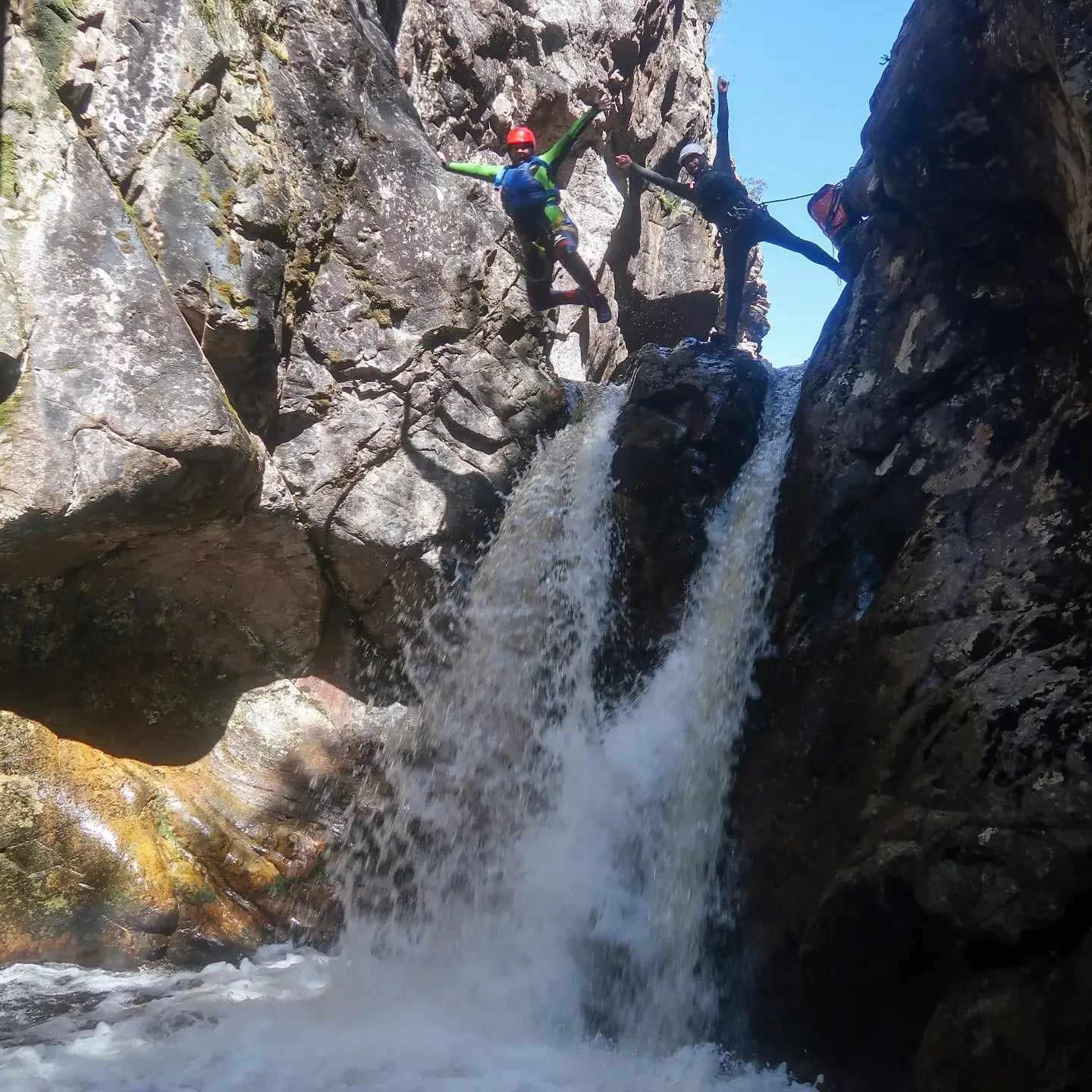
Cowabunga!
And so, we continued down the canyon. My elegant forward jumps off heights of up the 7m were no match for the guides’ flips and turns but it was a thrill none the less. At times we were just floating with the flow of the water and enjoying the incredible scenery.
The team are with you all the way to make sure everyone is safe and sound – if not entirely comfortable.
All up we navigated six waterfalls over the course of the day, but the hardest part of the day was still ahead.
Layers of soaking wetsuits and booties weighing us down, helmets still on to keep our hands free, we climbed and crawled 20mins uphill back to the ‘change room.’ It was exhausting and strangely hot. After changing, we loaded all that wet gear into our backpacks – which had now doubled in weight – and lugged those back to the transport. It was taxing on the shoulders more than anything as the dry bags are hardly fitted hiking packs!

All smiles at the end of the canyon before hiking out.
The team from Cradle Mountain Canyons make sure that moments throughout the day are captured on camera and emailed to you while you are warm, dry and enjoying a Tassie pinot at the end of an exhilarating day.
All up, the day was amazing. We had great weather, great guides and great fun! If thrill-seeking is something you do, and you have some basic fitness and can swim, I highly recommend this adventure into Lake St Clair National Park.
Looking for more adventures near Cradle Mountain? Why not try your hand at feeding some cheeky Tassie devils, or head out after dark to spot local wildlife?

Making it to the Cradle Mountain Summit... almost
Sometimes you look at a mountain or hike and think it won’t be that hard. At other times, it is harder than it looks. Summiting Cradle Mountain in Lake St Clair National Park is definitely the latter.
The thing is, it shouldn’t have come as a surprise. Everyone says this isn’t an easy summit, and even the woman who sold us our registration passes reinforced the ‘this is a tough summit’ message.
The good news is, you don’t have to complete a full summit to appreciate the hike in and around Cradle Mountain as the changing landscapes in this part of Tasmania and incredible vistas enroute mean you don’t have to go all the way to the top.

Views from Marion’s Lookout
There is one than one route to the top and with the added benefit of shuttle buses that move around every 15 minutes, you don’t need to start and finish at the same point. In my opinion, any hike that has minimal backtracking is a win!
The day we set out was a little cloudy, but as we ascended, we had bits of sunshine, but a lot of wind…
We started out early but just parked in the main car park and used the shuttle bus to get to the starting point of our choice. We decided to head off from Ronny Creek and finish at Dove Lake in the afternoon. This is a slightly longer route but provides more different landscapes along the way and considering I am definitely looking for the journey AND the destination, this seemed the way to go.

Lush and green at Ronny Creek
This route took us up to Crater Lake, Marion’s Lookout and Kitchen Hut before Summit, then down via Wombat Pool, Lake Lilla and finishing with some epic views from Dove Lake before grabbing a shuttle back to the main carpark (and a well-deserved wine at Cradle Mountain Lodge).
The hike started out easily enough after signing in at Ronny Creek (safety first of course) with gentle boardwalks surrounded by small creeks and native bushland. If you come back here at dusk, you will find this area lousy with wombats!

A waterfall on the way!
The scenery then changes as the elevation increases. There are a couple of small waterfalls and dense forest – the temperature is noticeably cooler in this section.
Soon after this section, you get to Crater Lake, marked by a cute little boat shed. The lake is immense and you get a reprieve from climbing until you reach the other side – then you start the UP to Marion’s Lookout.

Crater Lake
This section of the trail is steep and you will have to do some rock scrambling. There is a chain in sections to help you get up the bigger steps – very handy for those of us with shorter legs and not to mention those we met attempting The Overland Trail with giant packs as this is where the trails intersect.
Working up that sweat is all worth is for one of the best views of the day – panoramic vistas over Dove Lake on one side and Cradle Mountain peak on the other.

Views and lakes at every turn.
From here, we headed towards Kitchen Hut. This was a relatively cruisy walk with flatter sections and boardwalks but it was exposed to the elements and the cold wind was seeping through my layers. As we walked on, Cradle Mountain was at times completely enclosed in cloud – and simultaneously seemed very far away…

Looking for the Summit Trail…
Kitchen Hut is a spot for emergencies and not somewhere you can stay, but we sought a break from the chilly wind and ate our packed lunches inside. This is also the only bathroom on the trail so make the most of it (I would recommend BYO toilet paper in busy seasons).

Kitchen Hut
This is where the summit to Cradle Mountain proper really starts and just looking at it from here, you can see how steep the section is going to be.
After about 20mins of rocky incline you reach the point where it is all-rock scrambling. I am talking big, sometimes wobbly, sometimes jagged rocks with limited trail markers on white poles as you make your way up. You need hands and feet to scramble up here.

Starting the steep Summit
It was a little over half-way through this rock-scrambling – close to what is referred to as the false peak - and with shaking legs that I decided to take a break and decide if I had it in me to make it to the top. Thankfully my wonderful hiking partner didn’t hate me for deciding I didn’t.
In good weather conditions, I would say that the Cradle Mountain summit walk is definitely worth it. I have heard the 360-degree views are incredible, but we were in the clouds, with high winds and low visibility. We probably turned around not far from the top, but I had to choose safety over ticking a summit off the list.

The Summit ‘trail’
We headed back down to Marion’s Lookout (the only backtracking we did all day) and then turned off at Crater Lake to go down towards the Wombat Pool and Lake Lilla. This section of the trail was busier than any others and I have seen that a lot of people do the hike both from and returning to Dove Lake.

A slow descent
Walking along here, past Wombat Lookout, it is easy to see why it is referred to as the scenic route down some steep steps from the Wombat Pool to Lake Lilla.
From Lake Lilla, there are a few steps down but it is mostly flat and about 20mins before you reach Dove Lake. Time for the legs to begin rejoicing.
One of the last stops before you get to rest your legs is Dove Lake Boatshed – arguably the most famous photographed location in all of Cradle Mountain.

Dove Lake Boatshed
All up it took us a bit over eight hours to get to Dove Lake – not including our paddling time at the lake to refresh our feet in the icy waters. What an epic day and maybe one day I will go back and try the Summit again… but if I don’t, i still have incredible memories of this stunning part of Australia.

Freezing but refreshing for tired feet at Dove Lake.

Is Morans Falls Lamington National Park’s prettiest waterfall?
Lamington National Park in the Gold Coast Hinterland is full of waterfalls, but Morans Falls may reign supreme above the others.
From the pictures you find online, it may seem like this waterfall is incredibly remote and hard to get to, but that couldn’t be further from the truth.
Just a 2.4km easy walk through sub-tropical rainforest that starts not far from O’Reilly’s Rainforest Retreat will reward you with this incredible feat of nature.
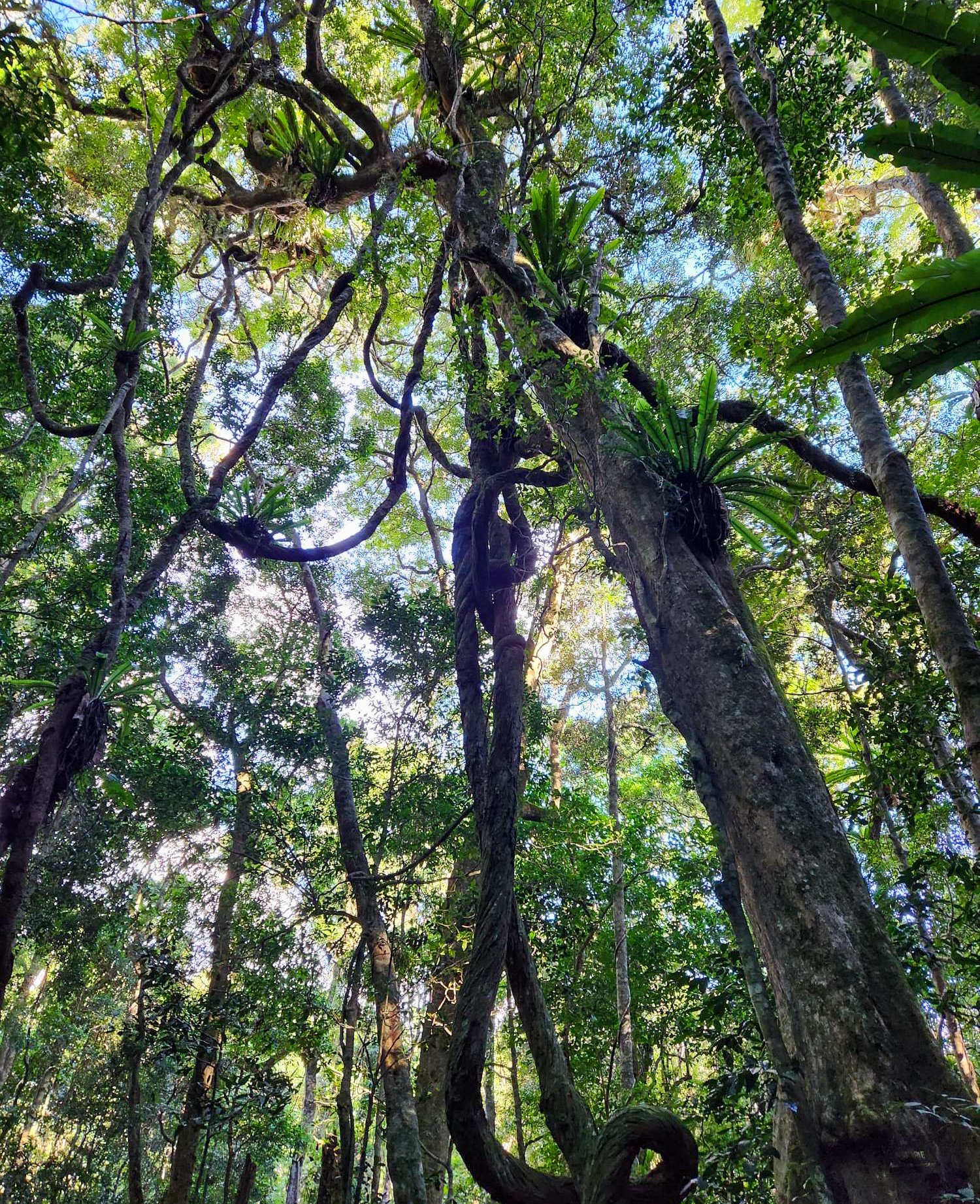
Nature on the trail
The entire trail is on a formed track and not very challenging, although there are some uphill sections. There aren’t any large stairs and the trail zig zags when going up/down hill, making it even easier on the legs
The trail itself is scenic despite being short. Plenty of twisted vines, ferns and strangler figs to admire as you make your way to the main event.

Views over the valley
Because the trail is so accessible, it can get pretty busy. We decided to pack some head torches and see if we would be lucky enough to have a nice sunset from the top of the falls given that they face west.
We were lucky there were only a handful of others doing the same thing the Friday afternoon we were there. If you really want to avoid too many people, I suggest a mid-week visit if at all possible.

Morans Falls from the lookout
We heard rumours of a short-cut track from O’Reillys but were told it can be muddy and isn’t as well marked, so we made our way to the main track. The added benefit of this, is that you walk by the official lookout point where you can view the epic falls from a distance. There is something really special about seeing all that water tumble down a cliff face.
Not far beyond the lookout, you’ll find yourself at the creek that turns into Moran Falls. There is a small concrete block pathway across the creek so you can cross over and continue walking to the second official Moran Falls lookout on the other side of the falls (although the second lookout is of the surrounding rainforest and valley rather than the falls). But, for those gram-worthy views from the top of the falls, you need to change direction and follow the creek towards the cliff – it goes without saying to watch your step and be careful around here.

Magic hour!
Plummeting 80 metres to the valley floor, Morans Falls fluctuates between a thunderous roar after rain, to a gentle trickle in the drier months. There was a decent flow on our visit, and we even ducked under for a dip – a very fresh dip!

Cooling off
The sound of the rushing water was so loud at points that you need to be pretty close to have a conversation.

Living on the edge
The uninterrupted views across the Albert River valley towards Mount Lindsey and Mount Barney are 100 per cent worth it and so was our sunset. Mother Nature really put on a show for us and it was so nice just soaking it all up.
To make it back, we headed back the way we came – definitely not attempting some sort of unknown short cut in the dark!